# Importing Used Phones: Duty Questions and Documents to Confirm Before Ordering

Assuming second-hand phones are duty-free can leave an order without an agreed import plan. Confirm the destination rules with the buyer's local broker, using clear lot, transaction and transport records.

- URL: https://nexussupplytech.com/blog/used-phone-import-duty-documents
- Category: Wholesale
- Date: 2026-10-11
- Author: Jack Lau
- Read time: 10 min read
- Tags: Used Phones, Import Documents, Buyer Responsibilities
- Related solution: [Review Standard Wholesale Phone Requirements](https://nexussupplytech.com/mobile-phones-wholesale)

Updated October 2026

Assuming a second-hand phone lot is duty-free can leave an order without an agreed import plan. Used condition alone does not settle the duty question: confirm the destination's classification, valuation, taxes and entry requirements with the buyer's local customs broker before committing to the lot.

This guide helps you prepare the facts and documents for that review. It gives a responsibility record, with a clearly limited UK example, rather than a tariff quotation. Start from the [mobile phones wholesale scope](/mobile-phones-wholesale) and the [China sourcing guide](/blog/how-to-wholesale-mobile-phones-and-accessories-from-china) when defining the transaction; the destination import decision remains a separate step.

## Key Takeaways

- Second-hand condition alone does not determine duty or tax treatment.
- Prepare lot, sale and transport records for a destination-specific broker review.
- Keep supplier handoff and destination import responsibilities separate.

**Takeaway:** Keep supplier handoff and destination import responsibilities separate.

## Quick check: duty follows the import facts

Ask for an answer tied to the actual lot, importer and destination. “Used phones” is too broad to close the question.

<div class="table-scroll">

| Input or item | Typical value or source | Why it matters |
| --- | --- | --- |
| Destination and import route | Buyer and appointed broker | Identifies which rules need checking |
| Importing legal entity | Buyer's registration and broker instructions | Names the party responsible for local confirmation |
| Phone model and version | Quotation and lot description | Gives the broker a concrete product description |
| Used or repaired condition | Seller's written condition statement and available records | Keeps the commercial description tied to the goods |
| Dispatch location and any origin claim | Actual dispatch arrangement and separate seller-provided origin information | Gives the broker distinct inputs for any proposed relief review |
| Transaction information | Invoice, purchase terms and payment record | Supplies facts for the valuation review |
| Freight and insurance information | Transport provider's documents or quotations | Identifies additional valuation inputs for local review |
| Classification, taxes and admission | Current local authority guidance and broker response | Closes the questions the supplier's quotation cannot settle |

</div>

This is a preparation list. Your broker should identify the documents actually needed for your jurisdiction and transaction. Do not treat the table as a universal statutory checklist or assume that the same phone lot receives the same treatment in another country.

**Takeaway:** Obtain a destination-specific answer against named goods and a named importer.

## Define the lot before asking for a duty answer

Give the broker a description that distinguishes the physical goods from the seller's grade name. A commercial grade can summarize condition, but it is not a customs conclusion.

Record the models, versions, quantities and stated condition for each line. Ask the seller to explain its use of “used,” “refurbished,” “repaired,” “working” or “for parts.” Keep unresolved differences in the packet rather than quietly replacing them with a more favorable description.

For a used-iPhone purchase, use the [grading and QC guide](/blog/used-iphone-wholesale-grading-qc-checklist) to agree what the seller's condition term means. Use it to agree condition and acceptance criteria, then carry the accepted description into the import-document review. The [used iPhone wholesale route](/used-iphone-wholesale) provides the relevant commercial inquiry context.

<figure class="article-figure"><img src="/blog/used-phone-import-duty-documents/lot-record.webp" alt="Several used phones with dark screens beside a blank condition-record sheet" width="1600" height="900" loading="lazy" /><figcaption>Record the lot's identity and stated condition separately from the destination's import treatment.</figcaption></figure>

<div class="table-scroll">

| Lot-description field | Record to collect | Question to leave open if unclear |
| --- | --- | --- |
| Model and regional version | Quote and product description | Do all units belong to the described line? |
| Quantity by line | Packing plan and invoice | Can the documents be reconciled to the same lot? |
| Use and repair description | Seller's condition statement | What does the stated condition include or exclude? |
| Included accessories | Purchase terms and pack description | Are accessories included on the transaction documents? |
| Proposed commercial description | Buyer and seller's agreed description | Does the broker need additional detail for classification or admission? |

</div>

For mixed model lots, do not let a single headline description hide differing conditions. Group the commercial lines clearly and ask the broker how the destination wants those differences represented. This does not prescribe a commodity code or decide whether a particular lot may enter.

**Common mistake:** Treating an agreed resale grade as proof of a duty exemption or import permission.

**Takeaway:** Agree the lot description first, then ask the broker what further details its review needs.

## UK example: valuation still applies to second-hand goods

UK guidance treats second-hand goods as goods requiring a valuation method; second-hand status does not supply the value by itself. This example concerns the UK guidance checked on October 11, 2026, and does not determine treatment in MENA or another destination.

[HMRC's second-hand goods guidance](https://www.gov.uk/guidance/customs-valuation/second-hand-goods) distinguishes goods the importer used abroad from goods the importer did not use before entry into free circulation. It states that, for goods imported immediately after sale, Method 1 may be usable even when the goods are second-hand. A previous owner's use is therefore not the same fact as the importer's own use abroad.

For the buyer, the practical question is which facts describe this transaction. A retailer purchasing used phones for resale should give the broker the sale and condition records, rather than apply an arbitrary age discount to the declared value. The guidance's separate treatment of importer-used goods is a reason to confirm the right method, not a general depreciation allowance for every second-hand purchase.

The [UK import steps](https://www.gov.uk/import-goods-into-uk) separately call for a commodity code and customs value, and require commercial invoices and customs paperwork to be retained. That supports reviewing classification and valuation as separate questions. Those steps cover permanent imports into Great Britain from outside the UK, and into Northern Ireland from outside the UK and the EU; other movements, including Great Britain–Northern Ireland moves, follow different processes.

<div class="table-scroll">

| UK question to put to the broker | Facts to provide | Written response to request |
| --- | --- | --- |
| Which import process applies? | Exact destination, movement and importer | Process and any distinction relevant to the route |
| Which valuation method fits this transaction? | Sale records and whether the importer used the goods abroad | Method and any further evidence needed |
| What supports classification and entry review? | Model, version, condition and intended goods description | Required product details and current authority references |
| Which tax and record requirements apply? | Proposed transaction and import arrangements | Applicable treatment and documents to retain |

</div>

The table is a proposed conversation record. It does not supply a UK duty rate, VAT rate, exemption threshold or phone classification. Ask the broker to confirm the current answer for the actual import before fixing the order.

**Takeaway:** Use the UK example to separate valuation facts, not to infer a worldwide second-hand exemption.

## Build a document and responsibility matrix

Assign a person to every missing document or decision. A complete-looking folder is of little use when no one owns the classification or valuation question.

The supplier can be asked for the commercial and condition information it holds. The buyer should agree with its appointed broker what is required locally and with the transport provider what transport records it supplies. Do not assume all documents are included in a quotation.

<figure class="article-figure"><img src="/blog/used-phone-import-duty-documents/document-packet.webp" alt="Plain transaction papers, a folder, pen and calculator beside a small carton and phone" width="1600" height="900" loading="lazy" /><figcaption>Keep transaction, condition and transport documents identifiable within one import-review packet.</figcaption></figure>

<div class="table-scroll">

| Record or decision | Proposed source or owner | What the buyer checks |
| --- | --- | --- |
| Commercial invoice and sale terms | Seller and buyer | Goods description, parties and transaction match the order |
| Lot condition and repair description | Seller; buyer reviews the agreed scope | Statements refer to the quoted lines and available evidence |
| Quantity and packing record | Party preparing the goods | Totals reconcile with the invoice and lot description |
| Transaction and payment evidence | Buyer and seller, as appropriate | Records can be linked to the same transaction |
| Freight and insurance records | Buyer or appointed transport provider | Which costs and movement the documents describe |
| Dispatch location and origin information, if relief is proposed | Seller supplies available information; buyer asks the local broker what evidence is needed | Keep dispatch location separate from any origin or eligibility claim |
| Actual exporter and any applicable export formalities | Buyer with its selected export or transport provider | Confirm the responsible party and requested documents for the actual departure location |
| Commodity classification and admission questions | Buyer with appointed local broker | Current destination-specific answer and supporting authority |
| Customs value, tax treatment and filing instructions | Buyer with appointed local broker | Required inputs, responsible party and unresolved items |

</div>

Use the [supplier verification guide](/blog/verify-mobile-phone-supplier-china) when names, references or document identity do not align. For the wider comparison of purchase terms, use the [wholesale quotation guide](/blog/how-to-compare-wholesale-phone-quotes). A lower quotation does not close a missing import-document question.

For a purchase within the published used-iPhone scope, send an RFQ with the destination, importer, lot description and document questions. NexusSupply responds to a clear RFQ within 1 business day. Tell the supplier which records your broker requests, and ask which can be supplied for the proposed lot. Confirm dispatch location separately from any claimed origin; ask the broker which eligibility evidence is needed if you intend to claim relief.

Use the blank handover record below for each document or decision. Identify a specific contact, rather than rely on a role shared by several parties.

<div class="table-scroll">

| Order / lot / description revision | Named entity and responsible contact | Document or reply reference / version | Missing / awaiting confirmation / confirmed | Buyer decision and date |
| --- | --- | --- | --- | --- |
| Buyer to enter | Buyer to enter | Leave blank until supplied | Awaiting confirmation | Leave blank until decided |

</div>

A record is confirmed only when the required reply or document is available and the buyer has recorded its decision. Sending a request does not close it. Retain accepted exceptions as decisions, with the affected lot and description version identified.

**Takeaway:** Keep document availability and the local import decisions under explicitly assigned ownership.

## Resolve mismatches before committing the order

Keep a mismatch open until the buyer has a written answer or an agreed change. The purpose is to avoid ordering against one description while preparing import documents for another.

<div class="table-scroll">

| Unresolved item | Next evidence or action | What closes it for this record |
| --- | --- | --- |
| Invoice and packing quantities differ | Reconcile the affected lines with the seller | Matching records or a documented correction |
| “Refurbished” is not defined | Request the seller's condition statement | Buyer agrees the description and sends it for local review |
| Freight information is missing | Ask the appointed transport provider for the relevant record | Broker identifies whether the supplied inputs are sufficient |
| Classification answer is generic | Provide exact product and condition details | Broker gives the answer for this lot and destination |
| Claimed exemption has no basis | Ask for the applicable official provision and eligibility evidence | Buyer and broker confirm the treatment or leave the claim unresolved |

</div>

These are buyer controls, not universal legal release conditions. Set the decision owner and the point at which the order can proceed in your own purchase terms. If the lot changes, send the changed facts back to the broker rather than treating an earlier answer as approval of the substitute.

Use the [landed-cost structure guide](/blog/wholesale-phone-landed-cost-structure) for the separate budgeting task once the local import inputs are confirmed. This document record does not estimate tax amounts or repeat the shipment-cost calculation.

**Takeaway:** Close questions against the final lot description, and reopen the review when that description changes.

## Separate supplier handoff from destination clearance

Record the supplier handoff and the buyer's onward arrangements separately. A domestic pickup or delivery arrangement does not, by itself, allocate destination import responsibilities.

NexusSupply's published handoff scope is a buyer-nominated mainland China or Hong Kong address, or buyer-arranged UPS/DHL pickup. It does not imply DDP, customs clearance, onward export or destination delivery. See the [mainland China and Hong Kong order-delivery guide](/blog/wholesale-order-delivery-mainland-china-hong-kong) for that scope.

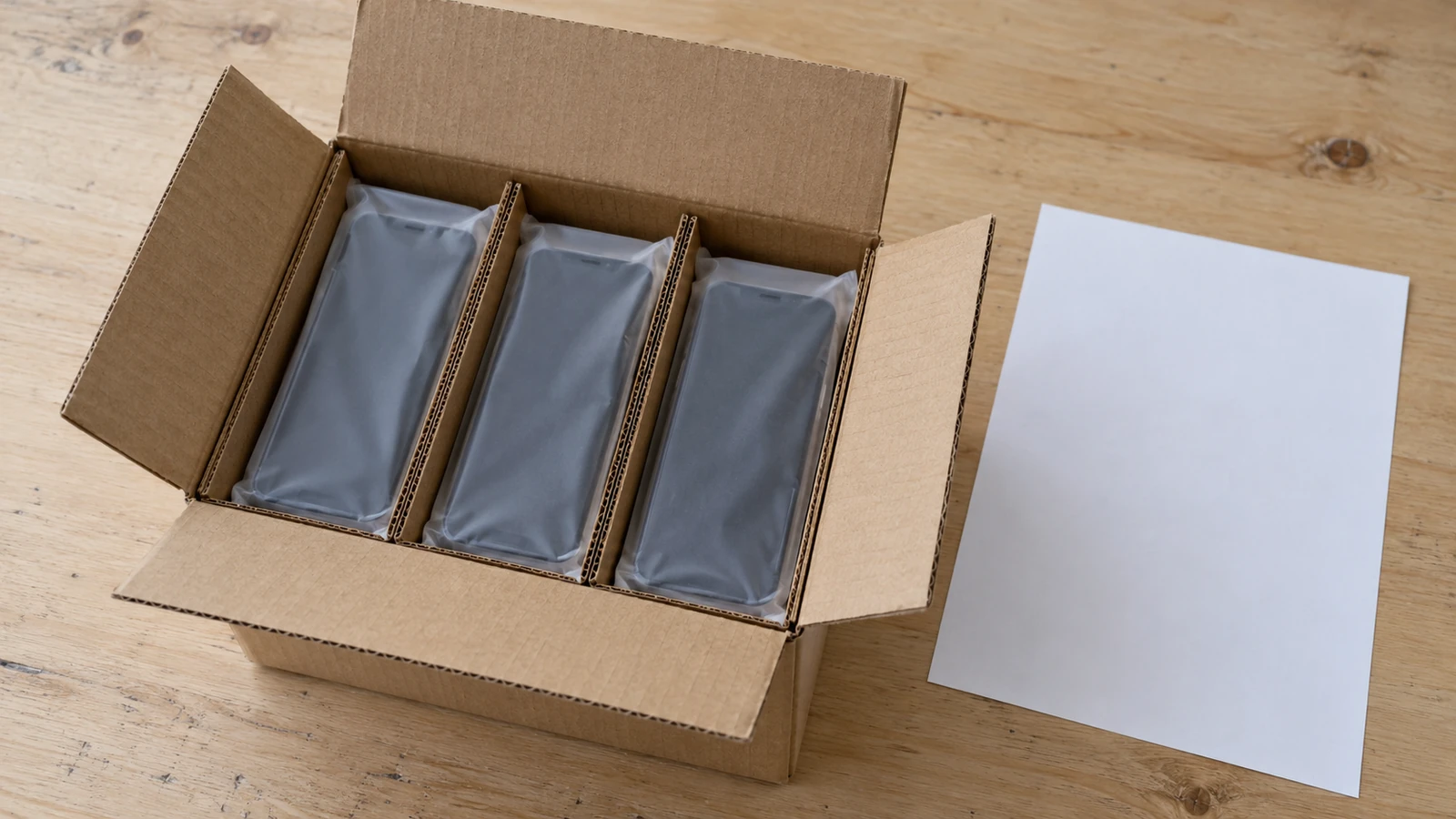
<figure class="article-figure"><img src="/blog/used-phone-import-duty-documents/handoff-carton.webp" alt="Individually protected phones in a small open carton beside a plain packing sheet" width="1600" height="900" loading="lazy" /><figcaption>Match the physical lot and packing record before the separately agreed handoff and onward import process.</figcaption></figure>

The buyer should identify its onward transport and local broker arrangements in the responsibility record. Ask who will receive the supplier's packet, who will seek corrections and who will confirm the import decision. Keep the same lot and order reference on that handover so documents can be reconciled without relying on informal chat descriptions.

**Common mistake:** Reading a pickup arrangement as an offer to handle overseas clearance.

**Takeaway:** Keep the supplier handoff, onward transport and destination import review as separate agreed responsibilities.

## When this does not apply

This is a commercial used-phone document-preparation guide. Personal belongings, gifts, temporary imports, returns, goods for repair and nonworking goods described as parts or waste can raise different questions. Ask the destination broker which process applies rather than borrowing an answer from an ordinary resale lot.

The UK example cannot supply another country's rates or admission rules. It also does not determine a particular UK phone classification, valuation outcome or entitlement to relief. No grade term, invoice description or photo in this guide grants import permission.

**Takeaway:** Obtain a separate local review when the movement, goods status or purpose differs from a commercial resale purchase.

## Method and sources

The UK example follows [GOV.UK's import steps](https://www.gov.uk/import-goods-into-uk) and [HMRC's second-hand goods valuation guidance](https://www.gov.uk/guidance/customs-valuation/second-hand-goods), checked on October 11, 2026. The import steps apply only to the Great Britain and Northern Ireland routes described above, and neither page sets rules for another country.

The document and responsibility tables are suggested preparation tools. Local authorities and the buyer's appointed broker determine the actual requirements. The photos show example phones and paperwork arrangements, rather than a cleared shipment or a customer import project.

**Takeaway:** Review the applicable official guidance with your broker using the final transaction facts.

## Do I need to pay import duty on second-hand goods?

Possibly: second-hand status alone does not make goods duty-free. Ask your local broker to confirm the destination's treatment for the actual classification, value and transaction. Any claimed relief needs its own applicable basis and eligibility evidence.

**Takeaway:** Request the answer for your lot and destination before treating it as duty-free.

## Do you pay VAT on imported second hand goods?

Import VAT or other local taxes can apply, so check them separately from duty with the destination broker. A response about duty does not complete the tax review. The UK example separates value and tax questions; it supplies no rate for your order.

**Takeaway:** Ask for the tax review to identify each applicable charge and its basis.

## What documents are needed to import goods?

Start with the commercial invoice, lot description, packing information and available transaction and transport records. Ask the broker to specify what else is needed for the particular goods and import route, and assign each missing item to an owner.

**Takeaway:** Use the preparation matrix to obtain the destination-specific document list.

## What items are exempt from import duty?

Only goods with a specific official relief basis; do not infer an exemption from the word “used.” Ask the broker to identify the current official basis for any relief claimed for this transaction and the records needed to show eligibility.

**Takeaway:** Keep an unsupported exemption claim open rather than using it in the order decision.

## Do I have to pay import duty on personal items UK?

It depends on the personal-use process that applies, which is a different question from buying a used-phone lot for resale. GOV.UK directs personal belongings and other special movements to separate processes. Ask which process applies to your actual purpose; this commercial guide gives no personal allowance or relief decision.

**Takeaway:** Describe the real purpose of the movement before requesting the UK review.

## How to import used phones from China?

Begin by defining the lot and importer, obtaining the seller's available records and appointing the people handling any applicable export formalities, onward transport and destination review. Then close the broker's classification, valuation and admission questions before ordering. The supplier's agreed local handoff remains separate.

**Takeaway:** Coordinate the document packet and responsibility record before committing the shipment.

## RFQ Fields

- Destination country and intended import route
- Importing legal entity and appointed local broker's document requests
- Phone model, regional version, quantity and agreed condition per line
- Seller's available use, repair and packing records
- Actual dispatch location and separately supplied origin information if relief is proposed
- Buyer-arranged export responsibility and any requested export documents
- Commercial invoice, transaction and payment-document requirements
- Freight and insurance information available from your transport provider
- Open classification, valuation, tax or admission questions for local confirmation
- Buyer-nominated handoff arrangement and document handover contact

### What to send us

<div class="table-scroll">
<table>
<thead>
<tr><th>Item</th><th>Why we need it</th><th>Example format</th></tr>
</thead>
<tbody>
<tr><td>Destination country and intended import route</td><td>Shows which destination review your records are for, so we can match the record requests to the right lot</td><td>Country; route and transport arranged by you</td></tr>
<tr><td>Importing legal entity and your broker's document requests</td><td>Lets us check each requested record against a named importer instead of a generic list</td><td>Entity name; broker contact; list of records requested</td></tr>
<tr><td>Phone model, regional version, quantity and agreed condition per line</td><td>Ties the quotation, invoice and condition statement to the same order lines</td><td>Model / storage / regional version / quantity / agreed condition term</td></tr>
<tr><td>Seller use, repair and packing records you need</td><td>Tells us which available records to check for the proposed lot; anything unavailable is marked as such</td><td>Record name; broker request it answers; available or not available</td></tr>
<tr><td>Dispatch location, and origin information only if relief is proposed</td><td>Keeps the dispatch place separate from any origin claim your broker reviews</td><td>Handoff point; origin information as specified by your broker</td></tr>
<tr><td>Export responsibility and any requested export documents</td><td>Identifies the party you have appointed for applicable export formalities; NexusSupply does not provide onward export</td><td>Exporter or provider name; documents it has requested</td></tr>
<tr><td>Commercial invoice, transaction and payment-document requirements</td><td>Lets the invoice and payment records match the order and your broker's request</td><td>Invoice details required; T/T or L/C, as confirmed in the RFQ</td></tr>
<tr><td>Freight and insurance information from your transport provider</td><td>Shows which costs and movement your provider documents, separately from the seller's records</td><td>Provider name; records it will supply</td></tr>
<tr><td>Open classification, valuation, tax or admission questions</td><td>Keeps unresolved broker questions visible on the order; we do not answer them for you</td><td>Question; responsible contact; awaiting or confirmed</td></tr>
<tr><td>Handoff arrangement and document handover contact</td><td>Confirms the buyer-nominated mainland China or Hong Kong address, or buyer-arranged UPS/DHL pickup, and who receives the document packet</td><td>Address or pickup arrangement; contact name and email</td></tr>
</tbody>
</table>
</div>

For a used-iPhone purchase, paste the lot requirements, document references and open questions into the [wholesale phone inquiry](/rfq) message. NexusSupply responds to a clear RFQ within 1 business day. Confirm local import treatment with your broker and request the supplier records it needs for the proposed order.

**Takeaway:** Order against a defined lot with explicit document availability and local decision ownership.