
Approving a multi-port charger from the headline wattage alone can reject the wrong line or accept a combination the carton never stated. A headline watt figure is not a port-combination record.
Write the charger, the port combination and the connection order before the line is approved. Bundle planning stays on the store-ready accessories guide. Charger models open for inquiry sit in the phone accessories wholesale range, on the phone chargers wholesale catalog. This page only records one combination.
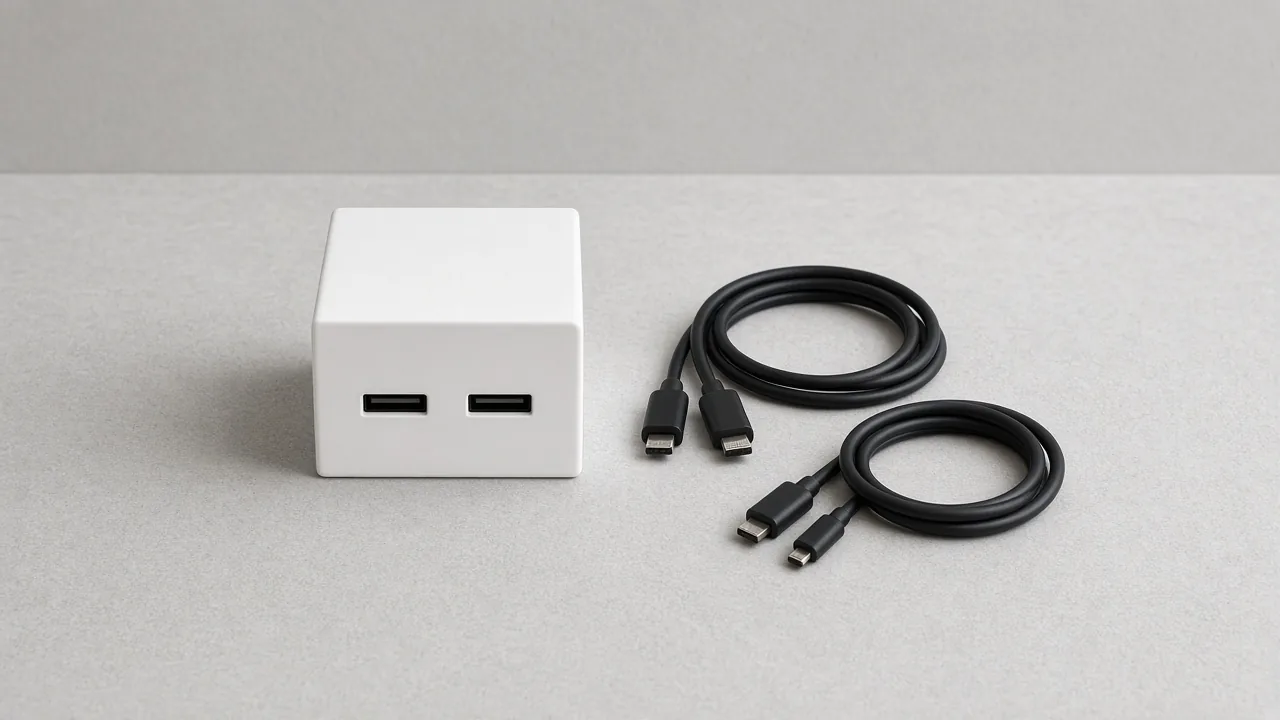
What has to be written before a multi-port charger is approved?
The row needs the charger and its revision, the port combination, and the order in which devices are connected. Until the published allocation and the sample notes exist, those cells stay blank.
Key Takeaways
- Write the charger and revision, the port combination and the connection order on one row.
- Copy the published allocation from that model’s document. A headline watt figure does not fill the cell.
- Copy the cable marking from the cable. Connector shape is not the allocation.
- Leave the published allocation, the transient note and the steady note blank until a document or a sample fills them.
Copy this blank combination record
Use one row per candidate combination. Leave a cell blank until a document or a sample fills it. Do not paste a live customer kit into a published copy of this page.
| Charger and revision | Port combination | Published allocation, copied | Devices and documented demand | Cable identity | Connection order | Transient observation | Steady observation | Buyer decision |
|---|---|---|---|---|---|---|---|---|
Published allocation is the figure copied from the manufacturer document for that charger and revision, for the combination named on the row. Transient observation is what happens in the moment a connection changes. Steady observation is the reading after that change has settled. Buyer decision is the buyer’s own next step, such as approve, hold or reject. A blank cell stays an open question.
Read one incomplete example
Every token below is a placeholder. This row is not a stocked charger, a customer kit, or a measured watt split.
| Charger and revision | Port combination | Published allocation, copied | Devices and documented demand | Cable identity | Connection order | Transient observation | Steady observation | Buyer decision |
|---|---|---|---|---|---|---|---|---|
| HYP-CHG-01, revision not recorded | Ports named by the buyer | HYP-DEV-01 and HYP-DEV-02; demand documents not attached | HYP-CABLE-01; jacket marking not copied | HYP-DEV-01 connected, then HYP-DEV-02 | unresolved |
Read the row as unfinished. The connection order names two placeholder devices. It does not state a watt figure for either one.
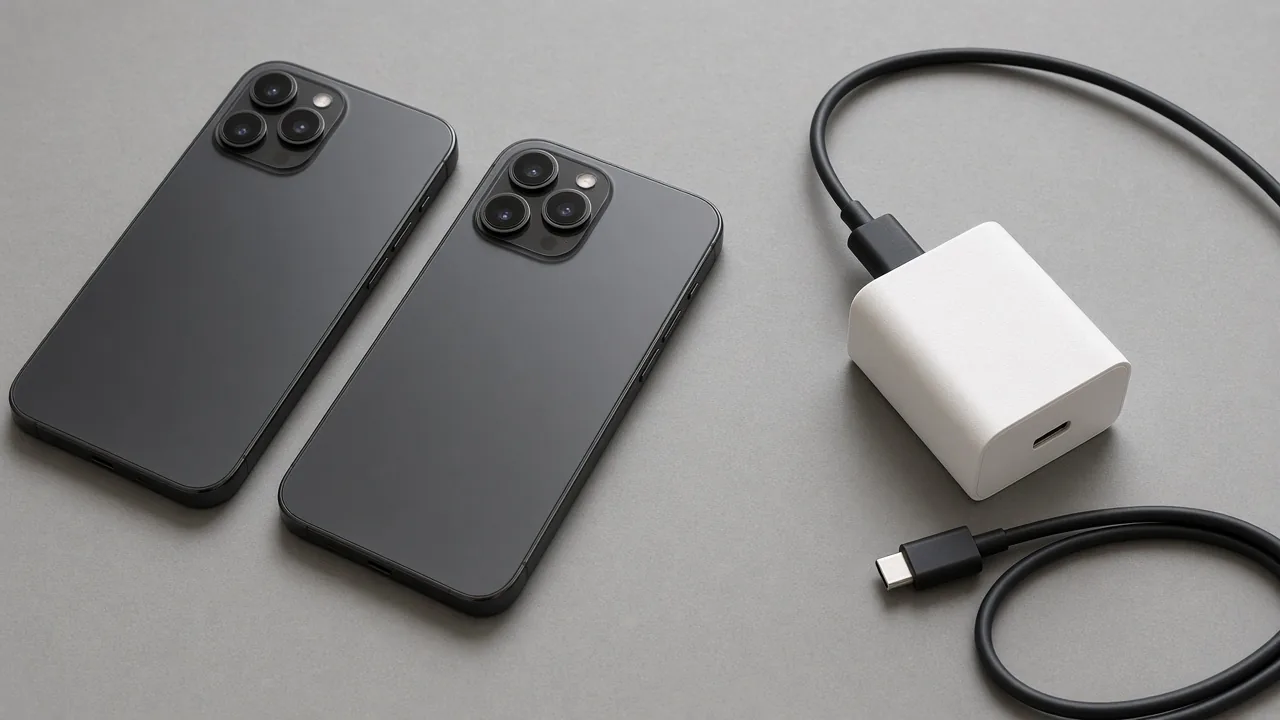
Copy the cable marking instead of inferring it
USB-IF’s cable and connector page, saved 11 October 2026, says cables do not all have the same capabilities. It also says a certified cable does not add capability to the products it connects, and does not remove the need to certify those products.
In the USB-C to USB-C section, USB-IF says that a cable passing its compliance program must be labeled with a 60W or 240W power icon, and that the logo has to be on the cable before compliance testing. A High-Speed USB (USB 2.0) USB-C to USB-C cable needs that power icon. The USB 2.0 or High-Speed logo on that cable is optional. USB-IF says the other USB-C to USB-C cables in the program also carry a data-rate mark. Its example is a USB 20Gbps USB-C to USB-C cable that supports 20V at 3A, marked with the combined 20Gbps/60W logo.
Those are labeling rules for the compliance program. They are not a rating for HYP-CABLE-01, and they are not the published allocation for HYP-CHG-01. Write the icon and the data mark you can see on the candidate cable. If the jacket has no mark, leave the cable cell blank.
USB-IF also says a captive cable is not eligible for that cable certification. It defines a captive cable as one USB connector with the other end fixed to a product or fitted with a non-USB connector. A USB-C to USB-C cable and a captive lead are different rows.
Keep the published allocation separate from the sample
The published-allocation cell is a copy from the document for the named charger and revision. This page does not supply that document, and it does not carry one model’s figures onto another model. If the document is missing, leave the cell blank.
The transient cell and the steady cell are sample notes for the connection order on that same row. Both stay blank until someone writes what the named combination did. A blank sample note is not a pass, and it is not a fault finding.
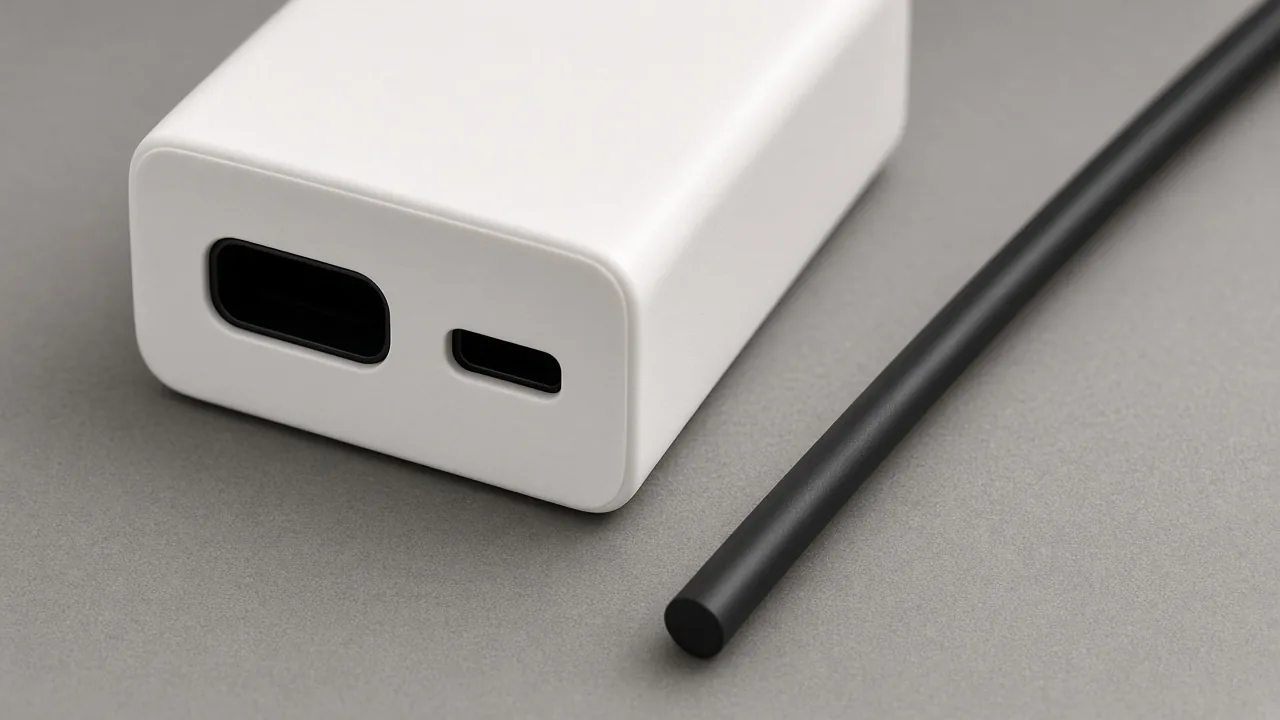
Two openings on one housing can be different shapes. The port-combination cell names the openings the buyer will use. The photograph does not count them for a SKU, and it does not assign a watt figure to either opening.
What this record does not decide
Batch acceptance of a split already written on an order line, including the rating plate and a sampled charge test, stays on the charger and power bank QC checklist. This page stops before that line is frozen.
This page does not rank chargers, state a price, or say which model is in stock. It does not cover charger safety certification, electric-vehicle charging, or a diagnosis for an unexpected restart. International freight, destination clearance and local certification are outside the row.
Method and sources
Read 14 October 2026 from the page saved on 11 October 2026. Search-result pages were used only to see that they do not provide a repeat-order row. The claims above stay inside the page named here.
- USB-IF, Cables and Connectors, USB-C to USB-C section, saved 11 October 2026. The page does not date its own revision in the text we read.
No watt split from a named charger is copied here. The published-allocation cell is filled only from the document for that model and revision. The photographs show ordinary objects on a table. They are not a shipment and not a power measurement.
What to send us
| Item | Why we need it | Example format |
|---|---|---|
| Charger model and revision | Names the unit on the row | Model, plus the document revision |
| Port combination | Names the openings in that combination | The openings the buyer will use |
| Published allocation, if the document is already in hand | Fills only the copied-allocation cell | The figure as printed, or leave the cell blank |
| Devices and their documented demand | Names what each opening will feed | Model notes, or leave the cell blank |
| Cable identity and the marking copied from the jacket | Names the cable on the line | Supplier reference and the mark as printed |
| Connection order, transient note, steady note and buyer decision | Shows the sequence and what is still open | The worksheet above, including blank cells |
We reply within 1 business day. Send the charger model and revision, the port combination, the published allocation if the document is already in hand, the devices and their documented demand, the cable identity, the connection order, the transient and steady notes, and the buyer decision, including cells still blank, in an RFQ.