
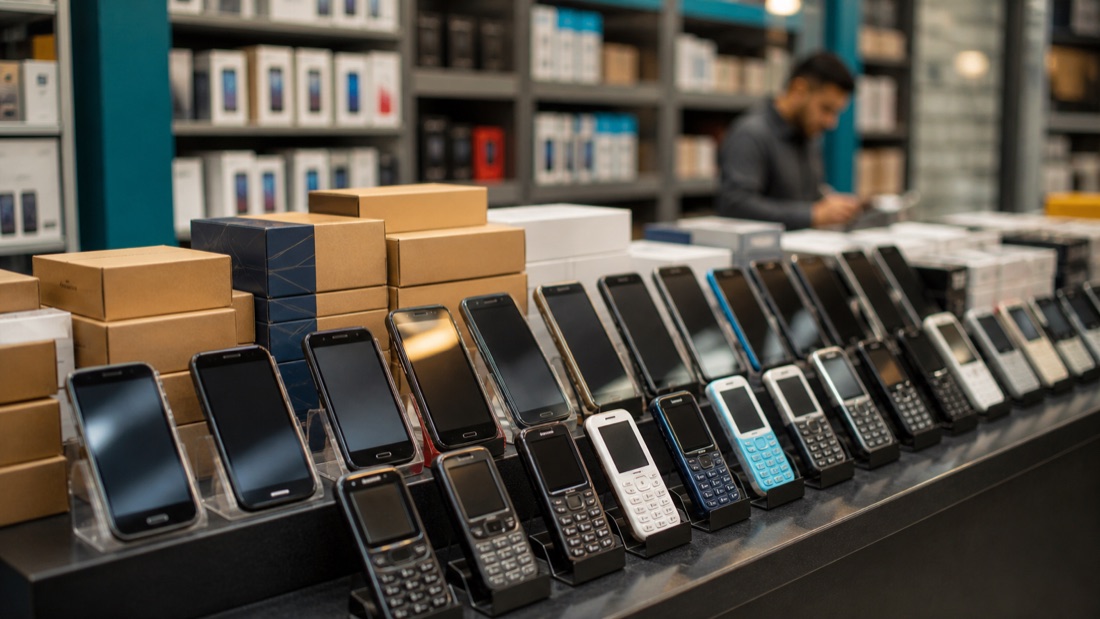
A lower unit price can stop looking cheaper once the details are checked. The supplier may have quoted the wrong storage variant, offered only two days of validity, or assumed that a delivery cost would sit with the buyer. This does not necessarily mean either supplier was dishonest. They may simply have answered different requests. A useful comparison begins by making both quotes answer the same one.
Use the complete China mobile-device sourcing guide to confirm the buying sequence, then check the low-MOQ phone wholesale route so the requested category and quantity match the commercial offer being compared.
Key Takeaways
- A price difference means nothing until the specification behind both quotes is identical.
- Validity windows, payment terms and response speed are part of the price, not side notes.
- A quote that excludes handling you assumed was included cannot yet be treated as the cheaper offer.
- For used iPhone batches, compare written grade definitions, battery floors and lock evidence — never the letter labels alone.
Make the quotes answer the same question
Before any number matters, the specification behind it has to match. A price difference between quotes is meaningless until you can rule out that it comes from a variant difference.
Match these fields
- Model and exact variant: regional version, storage and RAM, and colour. A different memory configuration is a different product.
- Condition and packaging: new sealed, and whose retail box; for used iPhones, the grade definition each supplier is using.
- Quantity and mix: the same total units, because tier pricing means 10 units and 50 units are different questions.
- Validity window: the stated expiry date for each price rather than an assumed one.
If one supplier quoted a different variant, do not try to adjust the number in your head. Send back the corrected specification and ask for a new quote. The RFQ checklist lists the fields that help produce an accurate first answer.
Read what the quote leaves out
The next step is to compare where each supplier’s responsibility ends. A lower quote may simply stop earlier in the delivery chain. Our boundary is stated on every page: delivery to a buyer-nominated address in mainland China or Hong Kong, or collection through the buyer’s UPS/DHL account. Export steps and onward freight remain on the buyer’s side. If a quote excludes handling that you assumed was included, the comparison is not complete. Delivery cost planning covers the full chain between the unit price and the cost that actually lands.
Packing detail belongs in this reading too: carton labelling, whether inspection photos are part of the handoff, and how quantity differences are handled if the batch arrives short.
Validity, payment and response are part of the price
A wholesale price is valid for a limited period. Phone allocations move weekly, so a longer validity window gives the buyer more time to decide. T/T and L/C also follow different timelines. A quote that matches the way your bank can move money may therefore be more useful than a spreadsheet comparison suggests. Before accepting either payment path, verify the supplier, contracting party and bank beneficiary. Response behaviour matters too. When a supplier answers a complete request within one business day and addresses substitutions and packing details in the reply, the buyer gets an early indication of how reorders may be handled.
Put both quotes into one worksheet
Use the same rows for each supplier:
- Specification row: model, variant, condition and quantity. Confirm that these are identical before continuing the comparison.
- Unit price and the validity date next to it, never apart.
- Included services: packing detail, inspection photos, labelling.
- Delivery boundary: where each supplier’s responsibility ends, and what you arrange from there.
- Payment terms and the date your money would actually move.
- Substitution answer: what happens to the price and timeline if one variant is out.
The worksheet often reveals that one supplier gave only a price while the other described a workable order. To collect an offer you can compare line by line, send the full specification through the RFQ. Keep the MOQ tiers beside you when setting quantities.
Comparing two used iPhone batch quotes
Used batches add one layer that the worksheet above does not capture: the same grade letter can describe two different lots. Two suppliers may both write “Grade A/B mixed” and still disagree on cosmetic criteria, battery floor and what counts as an exception. Compare the written definitions, never the labels.
Ask each supplier to answer the same five points in writing:
- Lot composition: exact models, storage and colour mix, and the unit count per line, not a single line that says “mixed”.
- Grade definition: the cosmetic criteria behind each label, in the supplier’s own words.
- Battery floor: the minimum battery health percentage counted as within grade, and the evidence offered for it.
- Lock status: how the lot is shown to be free of Activation Lock, MDM enrolment and carrier blocking — a per-device IMEI list is the usual form.
- Parts and exceptions: whether screens or batteries have been replaced and how that is marked, plus each supplier’s written terms for dead-on-arrival units and grade mismatches.
A batch quote that answers all five points can go into the same worksheet as a new-phone quote. One that answers none of them is not yet a comparable offer, whatever the number says. The used iPhone grading and QC checklist turns these points into a written lot specification you can attach to the request, and the used iPhone wholesale page shows the current scope we quote at RFQ stage.
RFQ Fields
- Exact model, variant, condition and quantity to be quoted
- Requested validity window for the price
- Preferred payment terms: T/T or L/C
- Delivery arrangement: mainland China / Hong Kong address or courier pickup
- Substitution acceptance per line
- For used iPhone batches: grade definition, battery health floor, lock status evidence and exception terms