
A generic compliance claim on a quote or safety sheet fails to link a wholesale power-bank order line to a verified UN38.3 test summary and can cause carrier booking rejection. Before arranging onward transport after mainland China or Hong Kong handoff, match the exact model number and Watt-hour rating marked on the power bank to the standardized elements of its UN38.3 Lithium Battery Test Summary. Under the UN Manual of Tests and Criteria (Part III, Sub-section 38.3, Paragraph 38.3.5) and US PHMSA guidance (49 CFR § 173.185(a)(3), revised July 2024), a compliant test summary must link the battery or product model identifier to a unique test report number, test date, laboratory contact, battery description, and T.1–T.8 test results. Matching these fields establishes document-to-model traceability for the purchased SKU; your appointed carrier still reviews route acceptance, transport classification, state of charge, and outer packaging separately.
When sourcing from the power banks wholesale catalog or adding backup battery lines to a store-ready phone and accessories bundle, keep the battery document record attached to the exact SKU and hardware revision on the purchase order rather than accepting a single “UN38.3 approved” line across a mixed assortment.
Quick specs: core inputs for UN38.3 document-to-model matching
Collect the unit marking and document fields below for every power-bank SKU on the order before handing the file packet to your freight forwarder or courier.
| Input or item | Typical value or source | Why it matters |
|---|---|---|
| Order-line SKU, product model code, and revision | Proforma invoice, purchase order, and unit casing print | Links the commercial order line to the physical product under review |
| Casing Watt-hour (Wh) and capacity (mAh) markings | Photograph of the physical unit rating plate and retail box | Must align with the declared battery energy on the test summary |
| Manufacturer name and contact details (Elements A & B) | UN38.3 Test Summary (49 CFR § 173.185(a)(3)(i)–(ii)) |
Identifies the cell, battery, or product manufacturer responsible for the design |
| Test laboratory name and contact details (Element C) | UN38.3 Test Summary (49 CFR § 173.185(a)(3)(iii)) |
Establishes which laboratory conducted the Sub-section 38.3 design tests |
| Unique test report ID and report date (Elements D & E) | UN38.3 Test Summary (49 CFR § 173.185(a)(3)(iv)–(v)) |
Connects the summary to a specific dated test report for that model |
| Battery description and model number (Element F) | Chemistry, mass, Wh rating, physical description, and cell/battery or product model number | Confirms whether the summary covers the finished power bank or only an internal cell |
| Tests conducted, edition, and signatory (Elements G–J) | T.1–T.8 pass/fail list, 38.3.3(f)/(g) reference if applicable, UN Manual revision, and responsible person | Completes the ten standardized UN 38.3.5 / US PHMSA test summary elements |
Key Takeaways
- A one-line “UN38.3 compliant” statement on an invoice, email, or safety data sheet does not replace a standardized Lithium Battery Test Summary.
- Check whether the model number on the Test Summary identifies the finished power bank product or only a bare internal cell.
- Reconcile the Watt-hour (Wh) rating printed on the power bank casing with both the capacity worksheet and Element F of the Test Summary.
- Keep supplier document collection separate from carrier booking approval: only the buyer’s appointed carrier confirms route rules, UN classification, and packing instructions.
Why does a generic UN38.3 compliance statement fail at carrier review?
A general statement on a safety data sheet (SDS/MSDS), quotation, or email saying that lithium batteries “meet UN38.3 criteria” does not satisfy the standardized test summary requirement. In the PHMSA Lithium Battery Test Summaries guide (revised July 2024) (page 6, Q9), the US Department of Transportation notes that while a shipper may read manufacturer statements as background, a general compliance sentence on an SDS, website, or email does not fulfill the requirement in 49 CFR § 173.185(a)(3) to make available a Lithium Battery Test Summary containing all ten standardized elements from UN Manual of Tests and Criteria Paragraph 38.3.5.
In wholesale power-bank procurement, three document mismatches routinely stall carrier review after goods are already packed:
| Common supplier document submission | What the file actually shows | Why onward carrier review stalls | Buyer verification action |
|---|---|---|---|
| SDS/MSDS with a single line stating “Passed UN38.3” | Chemical hazard and handling summary without Elements A–J | Lacks unique test report ID, test date, laboratory contact, and T.1–T.8 test results | Request the standardized UN38.3 Test Summary for the named SKU |
| Bare cell UN38.3 report for the internal pouch or cylindrical cell | Test record for an unenclosed cell part number | Under 49 CFR § 173.185(a)(1), assembled lithium batteries must meet Sub-section 38.3 design tests regardless of whether constituent cells are of a tested type |
Verify that the Test Summary covers the assembled battery pack or finished power bank model |
| Multi-model summary sheet listing a product family name | Range of capacities or models without per-model report mapping | PHMSA Q4 notes that multi-product summaries must still state the test report number and test date for each listed cell, battery, or product | Require exact model-to-report ID and date alignment for every ordered SKU |
| Outdated summary from an earlier hardware revision | Previous battery energy (Wh), mass, or cell configuration | PHMSA Q7 states that a design change requiring re-testing also requires a new or revised test summary | Hold substitutions until a summary matching the current hardware revision is supplied |
Takeaway: Treat an SDS/MSDS and a UN38.3 Test Summary as separate files with different functions; verify that the summary identifies the assembled power bank or battery pack actually ordered.
How do you match the 10 standardized test summary elements (A–J) to your order line?
Use the ten standardized elements specified in UN Manual of Tests and Criteria Paragraph 38.3.5 (published in US law at 49 CFR § 173.185(a)(3) and detailed in PHMSA’s July 2024 guide, pages 3–4) to cross-check each power-bank order line against the supplied document.
1. Trace the model identifier path (Element F(v) and PHMSA Q10)
Element F(v) requires the cell or battery model number, or alternatively—if the test summary is established for a product containing a cell or battery—the product model number. PHMSA Q10 explains that if the test summary is issued for a finished product, the model number on the summary links directly to the model number marked on the product casing; if issued for a stand-alone battery or cell, the model number appears on the battery or cell.
For a sealed wholesale power bank, buyers inspect the exterior product casing and retail packaging rather than disassembling units. If the supplied Test Summary lists only an internal battery-pack code that does not appear on the outer casing or order line, ask the supplier for written model-to-pack traceability or a product-level Test Summary naming the finished power-bank model code.
2. Reconcile Watt-hour (Wh) rating, mass, and physical description (Element F(i)–(iv))
Element F requires the battery chemistry (lithium-ion or lithium-metal), mass of the cell or battery, Watt-hour rating or lithium content, and a physical description (shape, dimensions, appearance, or product description per PHMSA Q5). Compare the Watt-hour figure in Element F(iii) directly against the Wh figure printed on the power bank casing and recorded on your power-bank capacity comparison worksheet. If the casing prints one Wh rating and the test summary states another, treat the mismatch as an open exception before paying the balance or booking pickup.
3. Check test report ID, date, laboratory, and T.1–T.8 results (Elements C, D, E, G, H, I, J)
Confirm that the document includes:
- Elements A & B: Manufacturer name, address, telephone, email, and website.
- Element C: Test laboratory name, address, telephone, email, and website.
- Elements D & E: Unique test report identification number and test report date. Where a summary covers multiple products, PHMSA Q3 and Q4 state that the specific test report number and date of test must still be shown for each cell, battery, or product listed.
- Element G: Results (
pass/failornot applicablewhere appropriate) for the eight UN 38.3 tests:T.1Altitude simulation,T.2Thermal test,T.3Vibration,T.4Shock,T.5External short circuit,T.6Impact/Crush,T.7Overcharge, andT.8Forced discharge. - Elements H, I & J: Reference to assembled battery testing requirements (
38.3.3(f)and38.3.3(g)) if applicable, the revised edition and amendments of the UN Manual of Tests and Criteria used, and the name and title of the responsible person validating the summary.
Takeaway: A complete document check verifies all ten Elements A–J and links Element F’s model number and Watt-hour rating to the physical unit marked on the order line.
Copy the blank order-line to UN38.3 document identity matrix
Create one record per ordered power-bank SKU and hardware revision. Leave any unconfirmed cell blank or write Unknown / verify on the unit. Do not copy a test report number, Watt-hour figure, or battery mass from one SKU into another SKU’s row.
| Matrix field | Buyer entry for the ordered SKU |
|---|---|
| Order line reference, exact product SKU, and hardware revision | |
| Product model number printed on the power bank casing and retail box | |
| Casing capacity (mAh), nominal voltage (V), and printed energy (Wh) | |
| Element A & B — Cell, battery, or product manufacturer name and full contact details | |
| Element C — Test laboratory name, address, phone, email, and website | |
| Element D & E — Unique test report ID number and test report date for this model | |
| Element F(i)–(iv) — Declared chemistry, cell/battery mass, Wh rating, and physical description | |
| Element F(v) — Model number on the Test Summary (specify whether product model or internal battery model) | |
| Element G — T.1 to T.8 test list and recorded pass/not-applicable status | |
| Elements H, I & J — Assembled battery reference (if applicable), UN Manual revision, and signatory name/title | |
| Summary source URL or file reference, revision status, and date checked by buyer | |
| Missing elements or model/Wh discrepancies requiring supplier clarification | |
| Supplier documentation contact and carrier review outcome |
When an order combines multiple power-bank SKUs or a supplier proposes a substitute model, track every document discrepancy in a separate exception table so unresolved lines do not hold up verified lines silently:
| Order line / SKU | Document gap or mismatch found | Action owner (supplier vs. buyer carrier) | Evidence required to close | Status (open / accepted exception / closed) |
|---|---|---|---|---|
| Buyer to enter | Leave blank until reviewed | Buyer to assign | Matching TS or written carrier confirmation | Open |
Takeaway: Keep missing elements blank until documented; an unverified cell is an explicit question for the supplier or carrier, never a number to estimate.
How should supplier, buyer, and carrier responsibilities be divided at handoff?
NexusSupply delivers wholesale orders to a buyer-nominated address in mainland China or Hong Kong, or prepares goods for buyer-arranged UPS or DHL pickup from the warehouse, as explained in the mainland China and Hong Kong delivery guide. NexusSupply does not provide international freight forwarding, customs brokerage, dangerous-goods classification, or carrier booking approval.
To prevent gaps between batch acceptance and onward shipping, separate the workflow across three distinct roles:
| Stage and owner | What this role records or provides | What this role does not decide |
|---|---|---|
| 1. Supplier at quotation & pre-shipment QC | Confirms which battery documents accompany the quoted SKU; provides rating-plate photos, carton dimensions/weights, and agreed batch QC records under the charger and power-bank wholesale QC checklist | Does not approve the buyer’s onward air, sea, or courier route or issue carrier booking acceptance |
| 2. Wholesale buyer before balance payment or pickup | Matches the physical unit model code and Wh marking to the Test Summary matrix; freezes substitutions; compiles commercial invoice, packing list, and battery document packet | Does not self-certify incomplete test summaries or assume domestic handoff packaging satisfies international air or maritime dangerous-goods rules |
| 3. Buyer-appointed carrier or freight forwarder | Reviews the matched Test Summary, SDS/MSDS, UN number (UN3480 vs. UN3481), state-of-charge limits, packing instruction, outer carton marks, and route acceptance under IATA lithium battery guidance or modal rules |
Does not verify internal electrical capacity or retail bundle compatibility on the buyer’s shelf |

Questions to hand to your appointed carrier before booking
Once the matrix above links each SKU to its Test Summary, send the completed packet and carton details to your carrier or freight forwarder with these route-specific questions:
- For the selected transport mode and route, does the carrier require the full UN38.3 test report in addition to the standardized Test Summary and SDS/MSDS?
- How does the carrier classify the shipment configuration (
UN3480for standalone power banks versusUN3481if packed with or contained in equipment under a specific kit arrangement), and which Packing Instruction applies? - What state-of-charge limit, inner non-conductive separation, outer UN performance packaging or drop-test evidence, and hazard marks are required before the carrier issues booking acceptance?
When this document check does not apply
- Jurisdiction and modal scope: The US PHMSA guide (
49 CFR § 173.185) is cited here as an official English-language reference that reproduces the ten standardized UN 38.3.5 test summary elements and common supply-chain Q&As. It is not a universal destination import law. Airlines, maritime lines, couriers, and destination authorities enforce their own modal and national rules. - Product scope: This worksheet applies to standard wholesale USB power banks. Do not transfer regulatory thresholds, inverter safety standards, or large-format battery rules from high-capacity AC portable power stations to compact USB power banks.
- No physical safety guarantee: Matching a paper or PDF Test Summary to a casing model code verifies document traceability for that design type. It does not prove that a specific lot is free from physical damage or storage abuse.
Frequently Asked Questions
Is UN38-3 mandatory?
Yes, under international dangerous-goods frameworks based on the UN Manual of Tests and Criteria (Part III, Sub-section 38.3) and national rules such as US 49 CFR § 173.185(a)(1) and (a)(3), lithium cells and batteries offered for transport must be of a design type proven to pass Sub-section 38.3 testing, and manufacturers or distributors must make a standardized Test Summary available.
Is a power bank UN3480 or UN3481?
Under 49 CFR § 173.185(c)(3)(i) and international dangerous-goods schedules, UN3480 applies to stand-alone lithium-ion batteries (which generally covers loose wholesale power banks shipped by themselves), whereas UN3481 applies to lithium-ion batteries packed with or contained in equipment. Confirm the exact classification and packing instruction for your shipment configuration with your appointed carrier.
Do UN38.3 test summaries expire automatically?
No. According to PHMSA’s July 2024 Lithium Battery Test Summaries guide (page 6, Q7), test summaries do not have an automatic calendar expiration date; a new or revised test summary is required when a change in cell, battery, or device design necessitates re-testing. Always verify whether your carrier imposes its own document-date policy.
Must the UN38.3 test summary travel inside every physical carton?
Under US PHMSA guidance (July 2024 guide, page 6, Q6 and Q8), manufacturers and distributors must make the Test Summary available upon request in the supply chain (for example via electronic file or website) rather than physically enclosing it inside every shipping box. However, carriers and forwarders routinely require the file during booking review before accepting cargo.
Method and sources
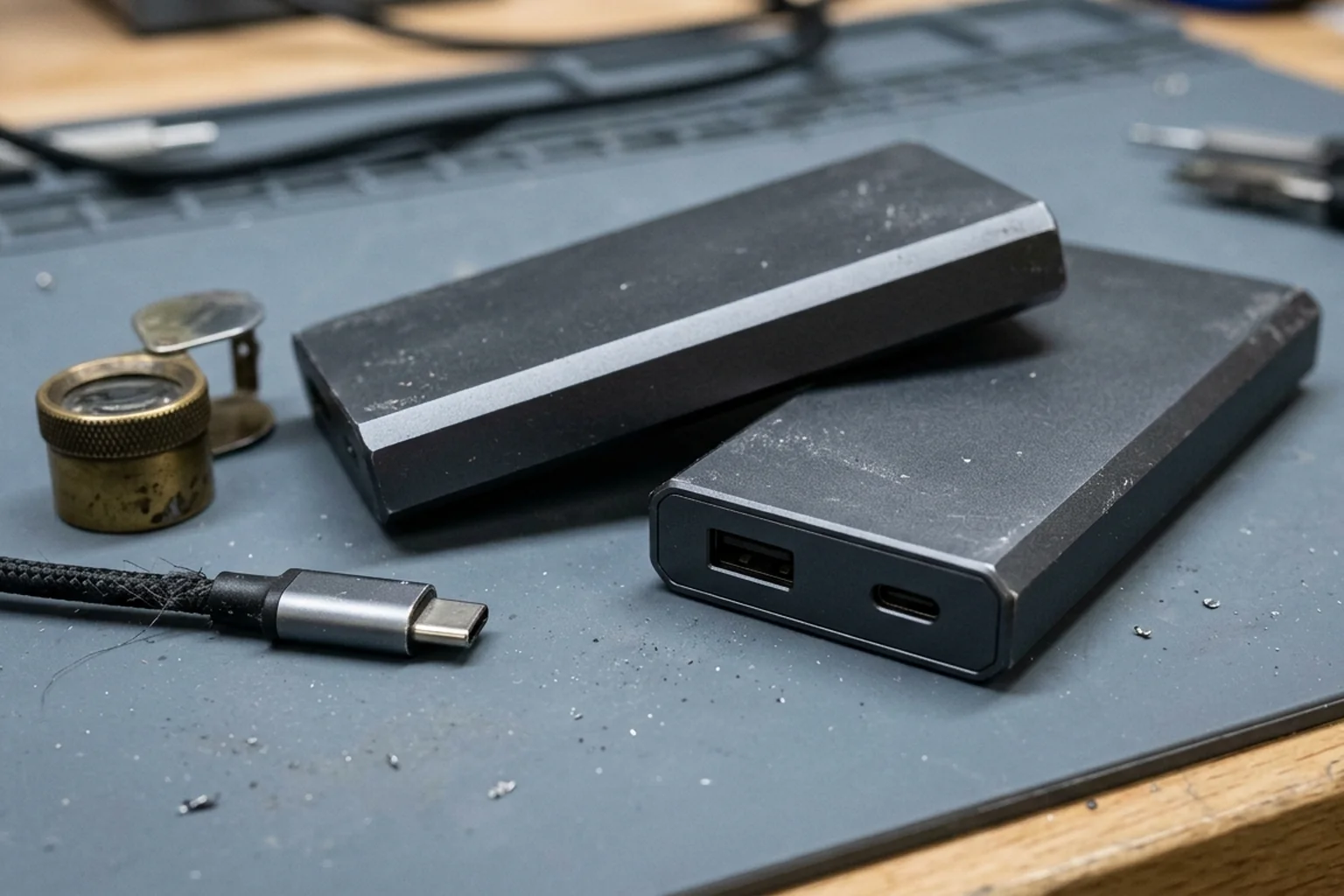
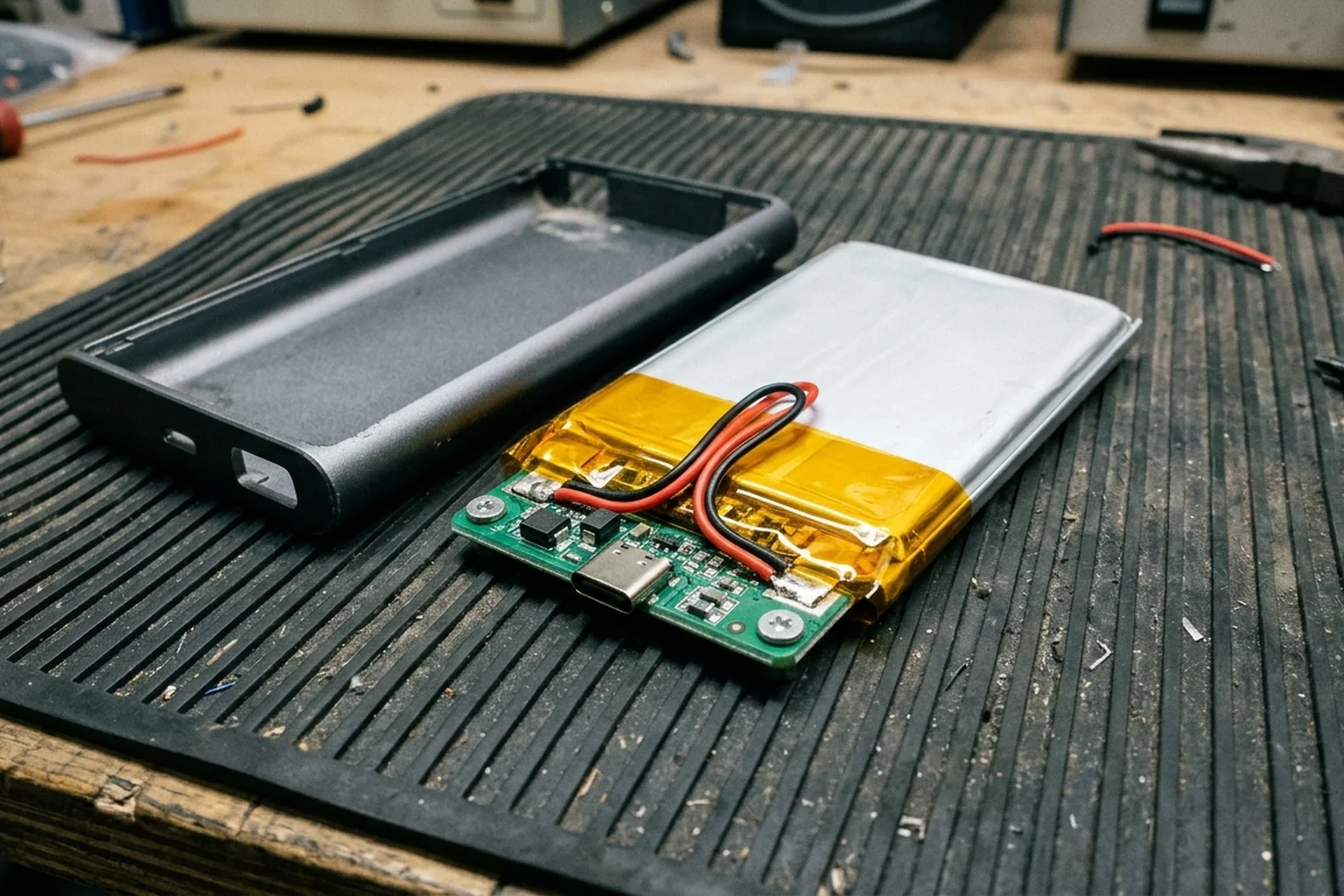
Reviewed 17 October 2026. This guide combines primary regulatory documentation with an original procurement matching matrix and role handoff checklist for wholesale buyers. No laboratory testing, legal classification, or carrier acceptance review was performed. The photographs depict generic unbranded hardware and packaging components for visual reference and do not represent a specific certified batch or shipment.
- US PHMSA Lithium Battery Test Summaries (TS) Guide (Revised July 2024): pages 1–6, standardized Elements A–J (
49 CFR § 173.185(a)(3)/ UN Manual of Tests and Criteria Paragraph 38.3.5) and Q1–Q11. - eCFR Title 49 § 173.185 — Lithium cells and batteries: design-type testing (
§ 173.185(a)(1)), ten test summary elements (§ 173.185(a)(3)), Watt-hour case marking (§ 173.185(a)(5)), andUN3480/UN3481marking rules (§ 173.185(c)(3)(i)). - IATA Lithium Batteries Guidance Hub: air-transport dangerous-goods framework to review with the buyer-appointed carrier.
What to send us
| Item | Why it matters |
|---|---|
| Order-line SKU, exact model code, hardware revision, and quantity (20+ units per accessory SKU) | Identifies the exact power-bank line to quote and check |
| Required casing markings (mAh, nominal V, and printed Wh) | Aligns unit markings with your capacity record and document check |
| Battery documentation references requested for your carrier review | Confirms which existing manufacturer documents are available for the quoted SKU before ordering |
| Domestic handoff method (mainland China or Hong Kong address, or buyer-arranged UPS/DHL warehouse pickup) | Matches the quotation and packing preparation to your appointed carrier handoff |
When requesting a wholesale power-bank quotation, send your target SKU model numbers, required casing Wh markings, battery document questions, and mainland China/Hong Kong delivery or courier pickup details through the RFQ, leaving any unconfirmed fields blank.