
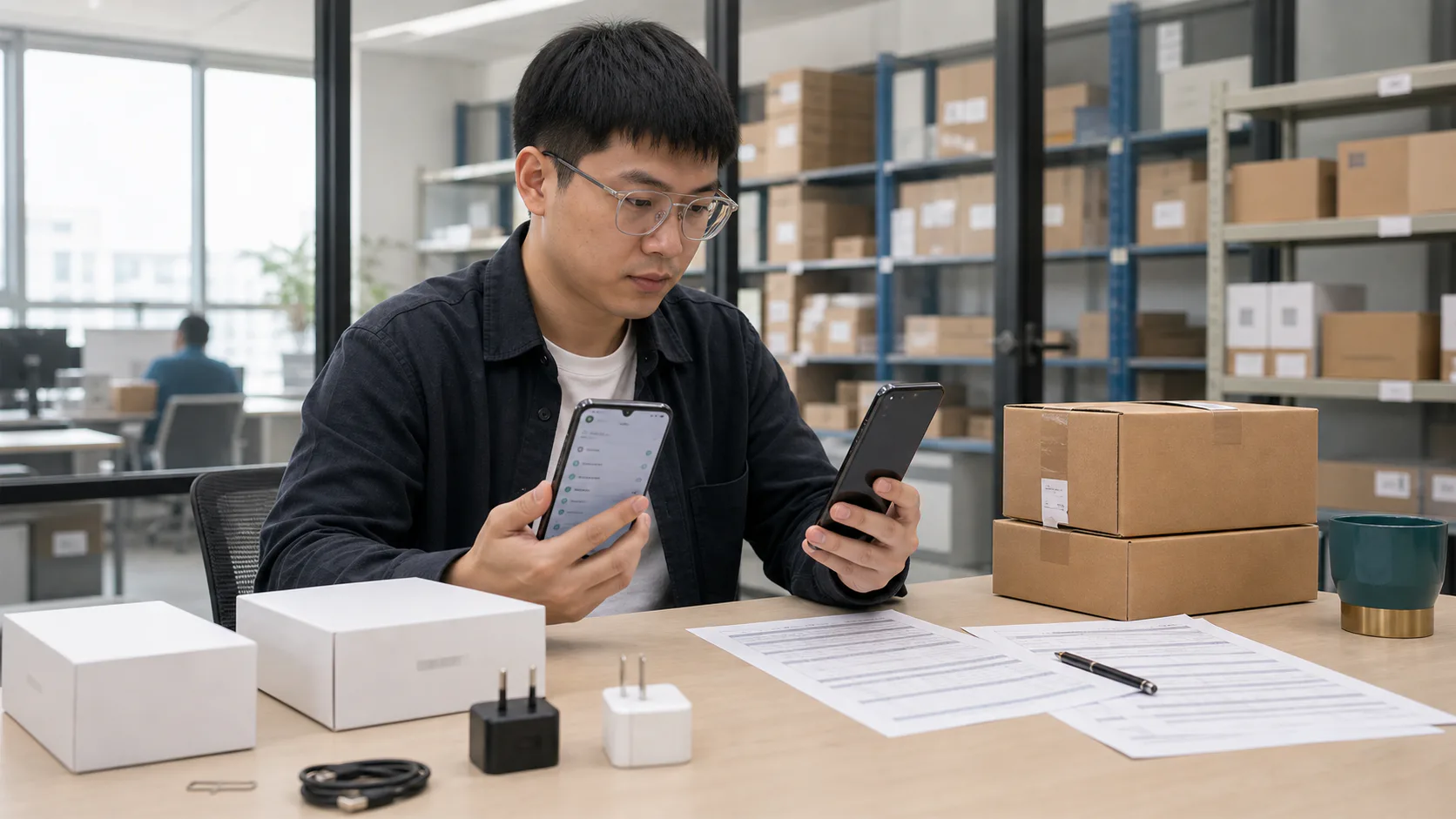
الهاتف الذي يُباع على أنه ”نسخة عالمية“ ليس مناسبًا تلقائيًا لكل دولة. قبل الشراء بالجملة، طابق رمز الطراز الدقيق والبرمجيات الموقّعة من المصنّع مع السوق المستهدف. ثم تحقق من اعتماد Google واللغات والنطاقات الترددية لشركات الاتصالات وSIM أو eSIM وNFC والقابس ومحتويات العلبة وسلوك OTA وأهلية الضمان. فملصق النسخة ادعاء يجب التحقق منه، وليس المواصفات نفسها.
قبل الاعتماد، اربط فحوصات النسخة هذه بالجهاز المأخوذ كعينة والعلبة وسجل الطلب باستخدام قائمة فحص ضبط جودة الهواتف المحمولة بالجملة (بالإنجليزية).
يغطي هذا الدليل الفحوصات التجارية التي يمكن لمشتري الجملة إتمامها قبل الدفع. وهو لا يحل محل تأكيد شركة الاتصالات أو المشورة المحلية بشأن امتثال المنتجات أو شروط الدعم الحالية الخاصة بكل دولة لدى المصنّع.
لمن هذا الدليل
هذا الدليل موجّه لتجار جملة الهواتف المحمولة وتجار التجزئة المستقلين وبائعي التجارة الإلكترونية والموزعين الإقليميين الذين يقيّمون مخزون Android لأسواق خارج البر الرئيسي للصين. وهو مفيد للغاية عندما يحمل عرضا سعر نفس اسم الطراز الاستهلاكي، أحدهما موسوم بـ”نسخة صينية“ والآخر بـ”نسخة عالمية“، دون أن يحدد أي منهما مزيج العتاد والبرمجيات الدقيق.
إذا لم يكن ملخص الشراء مكتملاً بعد، فابدأ بـدليل شراء الهواتف المحمولة والملحقات بالجملة من الصين. وللتحقق من الشركة ومسار الدفع، استخدم مسار التحقق من المورد المنفصل.
النقاط الرئيسية
- ”النسخة العالمية“ و”النسخة الدولية“ و”نسخة التصدير“ و”ROM العالمي“ تسميات يستخدمها البائع أو المصنّع، وليست معيارًا تقنيًا موحّدًا واحدًا.
- طابق رمز الطراز الدقيق ورقم البنية والمواصفات الرسمية للسوق المستهدف؛ فتشابه الاسم التجاري لا يثبت تطابق العتاد.
- وجود Google Play Store وحده لا يكفي. تحقق من حالة اعتماد Play Protect للجهاز على وحدة ممثّلة للدفعة.
- أكّد النطاقات الترددية مع شركة الاتصالات في السوق المستهدف، وتحقق من سلوك درج SIM وeSIM وNFC على النسخة المحددة بالضبط.
- التقط صورًا للملصق والختم والقابس والشاحن والملحقات المرفقة ومستندات الضمان قبل اعتماد الدفعة.
- ضع قواعد تعديل البرمجيات والاستبدال وقبول النسخة في عرض السعر أو الفاتورة الأولية (PI) أو أمر الشراء. فالمحادثة ليست سجل الطلب المعتمد.
الإجابة المختصرة
الفرق ليس مجرد ”وجود تطبيقات Google أو غيابها“. فقد تختلف النسخ الإقليمية من Android في معرّفات العتاد، والنطاقات الترددية المدعومة، وتهيئات SIM، وبُنى البرمجيات، واللغات، والخدمات المثبّتة مسبقًا، والملصقات التنظيمية، والشواحن، ومحتويات العلبة، وقنوات التحديث، وأهلية الدعم. تحقق من كل عنصر من هذه العناصر على حدة.
| الفحص | النسخة العالمية أو نسخة السوق المستهدف | نسخة السوق الصينية | دليل المشتري |
|---|---|---|---|
| هوية الطراز | رمز الطراز المدرج في صفحة المصنّع الإقليمية المعنية | رمز الطراز المحلي أو معرّف العتاد | صورة الملصق مع لقطة شاشة لصفحة حول الهاتف |
| خدمات Google | مجموعة تطبيقات Google المقصودة واعتماد Play Protect حيثما يُوفَّر | قد تستخدم نظام خدمات مختلفًا أو تهيئة برمجية مختلفة | شاشة اعتماد Play Store والاستعلام عن الجهاز المعتمد |
| اللغات | اللغات المخصصة لمنطقة البيع | قد تختلف مجموعة اللغات المحلية | فيديو مباشر لقائمة اللغة من العينة |
| الشبكة | النطاقات المنشورة للطراز الإقليمي الدقيق | قد تختلف النطاقات حتى تحت الاسم التجاري نفسه | صفحة المواصفات الرسمية مع تأكيد شركة الاتصالات |
| SIM وeSIM وNFC | قد تُفعَّل الميزات لأسواق وشركات اتصالات مختارة | قد يختلف سلوك العتاد أو البرمجيات | صورة درج SIM وفحوصات وظيفية مباشرة |
| القابس والتغليف | قابس وملصقات وأدلة ومحتويات علبة مناسبة للدولة | تغليف وقابس البر الرئيسي للصين | صور العلبة من ست جهات وقائمة المحتويات |
| OTA والدعم | مسار تحديث المصنّع وشروط الخدمة المحلية لتلك النسخة | قناة تحديث محلية وتوقعات دعم محلية | رقم البنية وشاشة التحديث ونطاق الضمان الموثّق |
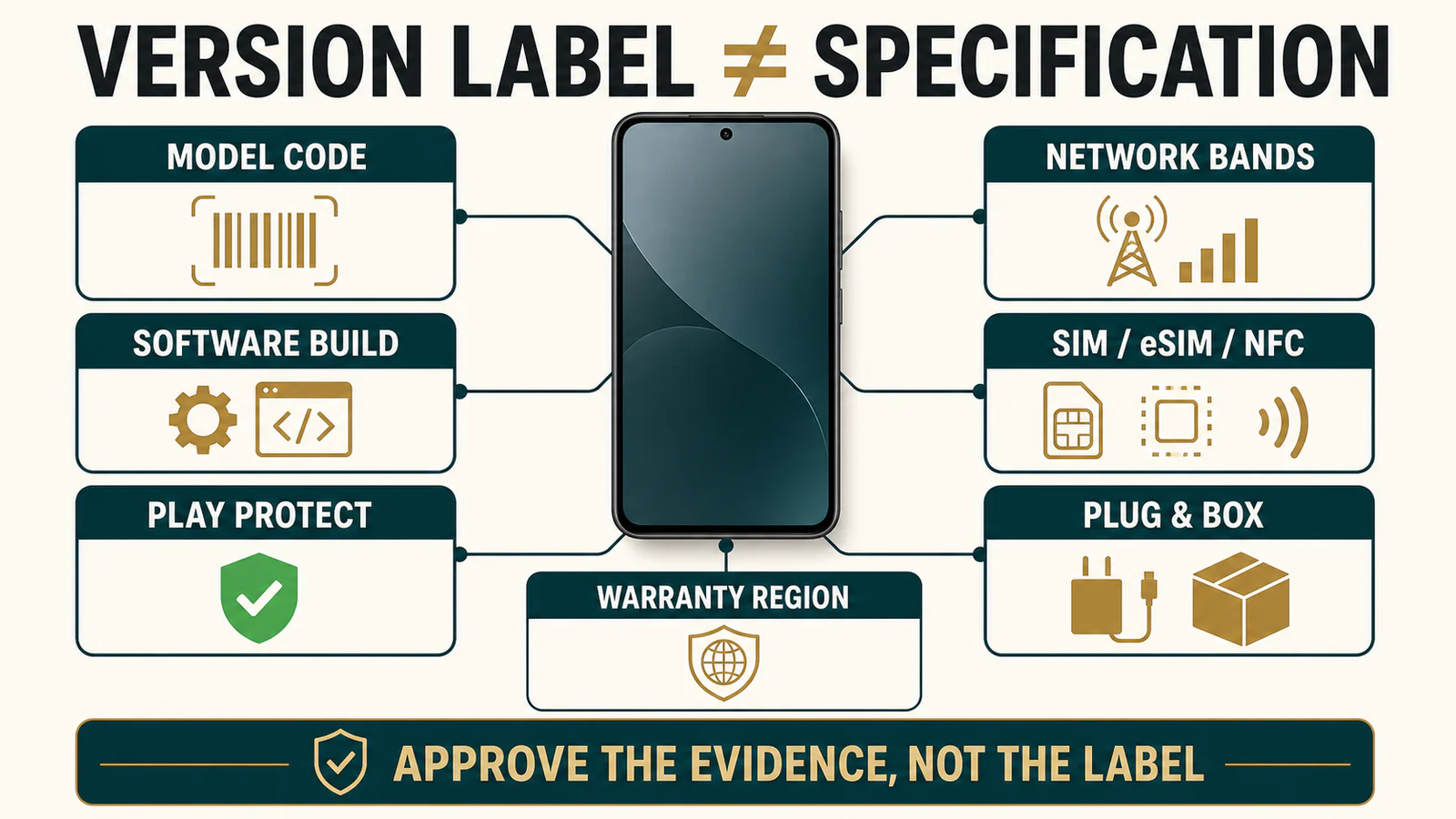
الجدول والمخطط إطاران للتحقق. تبقى الميزات الفعلية خاصة بكل طراز وبنية ودولة وشركة اتصالات.
ما الذي يمكن أن تعنيه ”النسخة العالمية“
لا توجد قاعدة موحّدة بين العلامات التجارية تجعل كل هاتف يُعلَن عنه بأنه ”نسخة عالمية“ متكافئًا. ففي قوائم الجملة، يمكن أن تصف العبارة ثلاث حالات على الأقل:
- **نسخة عتاد دولية رسمية** يبيعها المصنّع في أسواق متعددة؛
- **نسخة سوق مستهدف** مخصصة لدولة أو قناة بيع إقليمية معينة؛
- **هاتف يصفه البائع بأنه عالمي لأن برمجياته متعددة اللغات أو تتضمن تطبيقات Google.**
الحالتان الأوليان فقط هما نسختا بيع يحددهما المصنّع. أما الحالة الثالثة فقد تصف البرمجيات فقط. وتغيير ROM لا يضيف نطاقات راديو مفقودة، أو مكوّن eSIM، أو درج SIM مختلفًا، أو قابسًا محليًا، أو أهلية ضمان في السوق المستهدف.
بدلًا من كتابة ”يجب أن يكون عالميًا“، حدّد أن الهاتف يجب أن يطابق رمز الطراز وبنية البرمجيات والوظائف ومتطلبات العلبة المذكورة في الطلب.
النسخة العالمية والنسخة الإقليمية ونسخة التصدير ليست مترادفات
قد تكون النسخة الإقليمية هي الخيار الصحيح حتى عندما لا تُسوَّق تحت اسم ”عالمي“ عام. فقد تحتوي نسخة تُباع رسميًا للإمارات أو السعودية أو المملكة المتحدة أو المكسيك على مزيج اللغة المحلية والخدمة والقابس والملصقات الذي تحتاجه تلك السوق. المهم هو ما إذا كانت النسخة المحددة تناسب وجهة المشتري، وليس أي صفة تظهر على العلبة.
”نسخة التصدير“ أقل دقة حتى من ذلك. فقد تعني نسخة أصلية من المصنّع مخصصة لأسواق خارج الصين، أو قد تكون مجرد وصف تجاري يُطلق بعد الشراء. استبدل الصفة بالأدلة:
- اسم المصنّع والطراز الاستهلاكي؛
- رمز الطراز أو العتاد الدقيق؛
- دولة أو منطقة البيع المقصودة؛
- بنية البرمجيات من المصنع ومستوى تصحيح أمان Android؛
- حالة اعتماد Google حيثما تكون تطبيقات Google مطلوبة؛
- رابط المواصفات الرسمية للسوق المقصودة؛
- ملصق العلبة ومحتوياتها.
هواتف النسخة الصينية تحتاج إلى فحوصات خاصة بها
هاتف Android من السوق الصينية ليس بالضرورة مقلّدًا أو معيبًا أو غير مناسب. فقد يكون مخزونًا محليًا أصليًا بعتاد وسعر جذابين. وتبدأ المخاطرة التجارية عندما يفترض المشتري أن النسخة المحلية مطابقة تمامًا للهاتف المباع رسميًا في الدولة المستهدفة.
قبل اعتماد مخزون النسخة الصينية، حدّد كل ما يجب تغييره بعد خروج الهاتف من القناة المحلية. وإذا كانت خطة البيع تعتمد على برمجية ثابتة أخرى، أو خدمات مضافة، أو تطبيقات محذوفة، أو قابس مختلف، أو تعديلات يدوية في الإعدادات، فوثّق كل خطوة. وحدّد من ينفذها، وكيف تُختبر، وهل تؤثر على الاعتماد أو التحديثات، وكيف سيُخبَر العميل بذلك.
بالنسبة لمعظم برامج إعادة البيع، تكون البنية الأصلية من المصنع التي تطابق المتطلبات المستهدفة بالفعل أسهل في الفحص وإعادة التوريد من دفعة تعتمد على تعديل بعد الشراء.
ROM العالمي والنسخة العالمية ادعاءان مختلفان
يصف مصطلح ”ROM العالمي“ البرمجيات عادةً. أما ”النسخة العالمية“ فينبغي أن تصف نسخة سوق كاملة. لذلك قد يحمل الهاتف برمجيات عالمية مع احتفاظه بعتاد السوق الصينية وملصقاتها ومحتويات علبتها وحدود دعمها.
واجهة رئيسية مألوفة أو وجود Play Store ظاهر لا يثبت أن الجهاز نسخة رسمية للسوق المستهدف. تذكر Google أن الأجهزة المعتمدة من Play Protect فقط مؤهلة لتضمين تطبيقات Google المرخّصة مثل Google Play Store. وتظهر حالة الاعتماد داخل Play Store ضمن **الإعدادات ← حول**. كما تشير Google إلى أن فتح قفل المحمّل الإقلاعي (bootloader) أو تعديل بنية Android أو عمل روت يمكن أن يسبب مشاكل في الاعتماد.
بالنسبة للوحدة العينة، احتفظ بلقطات شاشة لكل مما يلي:
- الإعدادات ← حول الهاتف، بما يشمل الطراز ورقم البنية؛
- Play Store ← الإعدادات ← حول ← اعتماد Play Protect؛
- محدّث النظام الذي يعرض قناة التحديث الرسمية الحالية؛
- تحذير محمّل الإقلاع (Bootloader) أو تحذير السلامة إن ظهر أي منهما؛
- مسار إعداد إعادة الضبط من المصنع عندما يكون ذلك مهمًا تجاريًا.
توضح نظرة عامة على برنامج توافق Android أن الأجهزة المتوافقة مع Android تتبع وثيقة تعريف التوافق (CDD) وتجتاز مجموعة اختبار التوافق (CTS). بعد ذلك، توفر إرشادات اعتماد Play Protect من Google فحص الاعتماد الظاهر للمستخدم. لا يحوّل أي من الفحصين الهاتف إلى نسخة إقليمية محددة؛ فهما يجيبان عن سؤال أضيق يتعلق بتوافق البرمجيات والترخيص.
التحقق من Google Mobile Services واعتماد Play Protect
إذا كانت تطبيقات Google مطلوبة في السوق المستهدف، فتحقق من تجربة البرمجيات وحالة الاعتماد على العينة الدقيقة نفسها. فالطراز المشابه المعروض في كتالوج ليس دليلًا على النسخة محل الطلب.
اتبع هذا التسلسل:
- افتح Play Store وتأكد من عمل تسجيل الدخول؛
- انتقل إلى شاشة اعتماد Play Store وسجّل النتيجة؛
- طابق الطراز أو رقم البنية مع إرشادات الأجهزة المدعومة من Google؛
- اختبر التطبيقات الأساسية للمشتري، بما يشمل تطبيقات الخدمات المصرفية والمدفوعات والخرائط والمراسلة أو إدارة الأجهزة حيثما ينطبق ذلك؛
- أعد التشغيل، وعند الاقتضاء أعد ضبط العينة من المصنع للتأكد من أن الإعداد قابل للتكرار؛
- اشترط أن تستخدم الدفعة النهائية البنية المعتمدة ما لم يُقبل استبدال كتابيًا.
تجنّب الادعاء العام بأن ”جميع تطبيقات Google تعمل“. فالتوفر قد يعتمد على ناشر التطبيق والدولة والحساب وسلامة الجهاز وإصدار البرمجيات. اذكر التطبيقات التي يحتاجها المشتري واختبرها.
التحقق من لغات النظام والتطبيقات المثبّتة مسبقًا
اللغة المطبوعة على العلبة الخارجية لا تثبت أن كل قائمة في النظام أو لوحة المفاتيح أو شاشة الإعداد أو التطبيقات المثبّتة مسبقًا تدعمها. اطلب مقطع فيديو متواصلًا يبدأ من قائمة اللغات ويمر عبر الإعداد الأولي والإعدادات ولوحة المفاتيح وتطبيق الاتصال والكاميرا والمتصفح وشاشة التحديث.
لإعادة البيع في منطقة الشرق الأوسط وشمال أفريقيا، سجّل ما إذا كانت العربية والإنجليزية متاحتين أثناء الإعداد الأولي. فاللغة التي تُضاف لاحقًا عبر تنزيل تطبيق لا تستوفي هذا الفحص. اذكر التطبيقات التي يجب أن تكون موجودة أو قابلة للإزالة أو غائبة. فالبائع الذي يعد بتجربة تجزئة نظيفة يحتاج إلى معرفة ما إذا كان العملاء سيرون متاجر التطبيقات المحلية الصينية أو محتوى مقيّدًا حسب المنطقة أو رسائل بالصينية فقط أو خدمات تتطلب حسابًا في بر الصين الرئيسي.
لا تطلب من المورد ”إزالة كل التطبيقات الصينية“ دون قائمة قبول محددة. فبعض مكونات النظام لا يمكن أو لا ينبغي إزالتها، والتعديل العدواني قد يؤثر على الاستقرار أو سلوك التحديث. حدّد النتيجة التي سيراها العميل واعتمدها على عينة.
طابق النطاقات الترددية مع رمز الطراز الدقيق
اسم الطراز الاستهلاكي وحده لا يكفي لإثبات التوافق مع شركة الاتصالات. سجّل رمز الطراز من الجهاز والعلبة والمواصفات الإقليمية الرسمية. قارن نطاقات 4G و5G المنشورة له مع متطلبات شركة الاتصالات المستهدفة. تأكيد شركة الاتصالات أكثر فائدة من تصريح المورد بأن الهاتف ”يعمل في كل مكان“.
فحص النسخة هذا منفصل عن تحليل راديو كامل. تساعد قائمة تحقق RFQ لأجهزة Android المشترين على تحديد الدولة المستهدفة والمشغّل ومتطلبات الشبكة. الخطوة التقنية التالية هي مقارنة رمز الطراز بشركة الاتصالات.
قد يتصل الهاتف بالشبكة دون أن يقدّم التجربة التجارية المطلوبة. فقد تختلف التغطية والوصول إلى 5G وتجميع الحاملات (carrier aggregation) وVoLTE ومكالمات Wi-Fi والاعتماد باختلاف المشغّل والباقة. ”استقبال الإشارة“ نتيجة أولية، لا قبول نهائي.
تحقق من SIM المادية وeSIM وNFC كل على حدة
SIM وeSIM وNFC متطلبات على مستوى النسخة. لا تستنتجها من اسم عائلة المنتج.
اطلب صورة واضحة لدرج SIM وسجّل التركيبات المدعومة: nano-SIM واحدة، أو nano-SIM مزدوجة، أو nano-SIM مع eSIM، أو تركيبة أخرى. بالنسبة لـ eSIM، اختبر القائمة وتأكد من الدعم مع شركة الاتصالات المستهدفة. توضح مواصفات Xiaomi 15 الرسمية من Xiaomi لماذا يجب أن يكون هذا خاصًا بكل سوق: فهي تسرد عدة تركيبات SIM/eSIM مع التحذير من أن توفر eSIM يختلف حسب الدولة والمنطقة وشركة الاتصالات.
بالنسبة لـ NFC، اختبر حالة الاستخدام الفعلية للمشتري. فقراءة علامة (tag)، وإقران ملحق، واستخدام بطاقة نقل، وإجراء دفع بدون تلامس وظائف منفصلة. قد يعتمد سلوك المحفظة والدفع على المنطقة والبنك والحساب والاعتماد وسلامة البرمجيات.
تحقق من الشاحن والقابس والتغليف والملصقات
تستمر اختلافات النسخة خارج الهاتف نفسه. اطلب صورًا حالية للعلبة المختومة من الجهات الست، بالإضافة إلى محتويات علبة مفتوحة لعينة معتمدة واحدة.
تأكد من:
- هل يتضمن الطلب محوّل طاقة؛
- نوع القابس والإدخال/الإخراج المقنّن؛
- نوع الكابل وطوله؛
- حالة الختم والملصق من المصنع؛
- رمز الطراز المطبوع واللون وRAM والتخزين؛
- لغات الدليل والضمان؛
- الملصقات التنظيمية أو ملصقات المستورد التي يطلبها المشتري؛
- الغطاء الواقي أو الفيلم أو الملحقات الأخرى المرفقة؛
- هل سيضيف المورد أو يزيل أو يعيد وضع ملصقات على أي شيء.
تحذّر صفحات المواصفات الرسمية أيضًا من أن المحتويات قد تختلف. تذكر صفحة Xiaomi 15 العالمية من Xiaomi أن محتويات العلبة قد تختلف باختلاف المناطق. وتنشر HONOR مسارات دول ومناطق منفصلة لـمواصفات Magic8 Pro. استخدم صفحة المصنّع الخاصة بالسوق المستهدف واحتفظ بالعلبة الفعلية المعتمدة في سجل الطلب.
تحقق من تحديثات OTA والبرمجيات المثبتة
”OTA يعمل اليوم“ ليست نتيجة كاملة. يحتاج المشترون لمعرفة ما إذا كانت العينة تستخدم البنية الموقّعة من المصنّع المقصودة، وتُظهر حالة اعتماد طبيعية، وتطابق البنية المخططة للدفعة المعتمدة.
اطلب إصدار نظام التشغيل الحالي ورقم البنية وتاريخ تصحيح أمان Android وشاشة أداة التحديث. اسأل عمّا إذا كان الهاتف قد خضع لفتح القفل أو الروت أو التحديث البرمجي (flashing) أو تغيير المنطقة بعد خروجه من قناته الأصلية. وإذا كان الأمر كذلك، فقيّم ذلك الهاتف المعدّل كتهيئة منفصلة لها اختبارات إعادة ضبط وتطبيقات واعتماد وتحديث خاصة بها.
توصي إرشادات Google لاستكشاف أخطاء الاعتماد وإصلاحها باستعادة بنية Android الأصلية الموقّعة من المصنّع عند تسبب نظام تشغيل معدّل في فشل الاعتماد. والادعاء بأن ”البائع يمكنه تثبيت ROM عالمي“ ليس ميزة قبل أن يعرف المشتري أي بنية ستُثبَّت وماذا يحدث بعد إعادة الضبط أو التحديث.
أكّد الضمان والدعم الإقليمي كتابيًا
عادةً ما يحكم دعم المصنّع كل من المنتج والسوق وقناة البيع وإثبات الشراء والشروط المحلية. ولا تخلق العلبة ذات المظهر العالمي تغطية ضمان عالمية.
تُظهر خدمة الضمان الدولي لهواتف Xiaomi من Xiaomi سبب أهمية هذا التحقق. فهي تنطبق على طرازات محددة وأسواق مدعومة، وتشير إرشادات الأهلية فيها إلى الشراء عبر القنوات الرسمية والتفعيل المحلي. هذا لا يعني أن هواتف Xiaomi الأخرى بلا ضمان. فما زال على المشترين التحقق من الطراز والشروط الدقيقة للسوق بدلاً من افتراض أن كلمة ”عالمي“ توفر خدمة دولية.
في عرض السعر أو الفاتورة الأولية (PI)، ميّز بين:
- ضمان المصنّع في السوق المستهدف؛
- ضمان المصنّع في سوق المصدر فقط؛
- ترتيب معالجة أو إرجاع يقدّمه المورد؛
- عدم وجود التزام دعم يتجاوز الفحص والتسليم المتفق عليهما.
لا تنشر أو تعِد بضمان المصنّع ما لم يتم تأكيد النسخة الدقيقة والقناة وأهلية الوجهة.
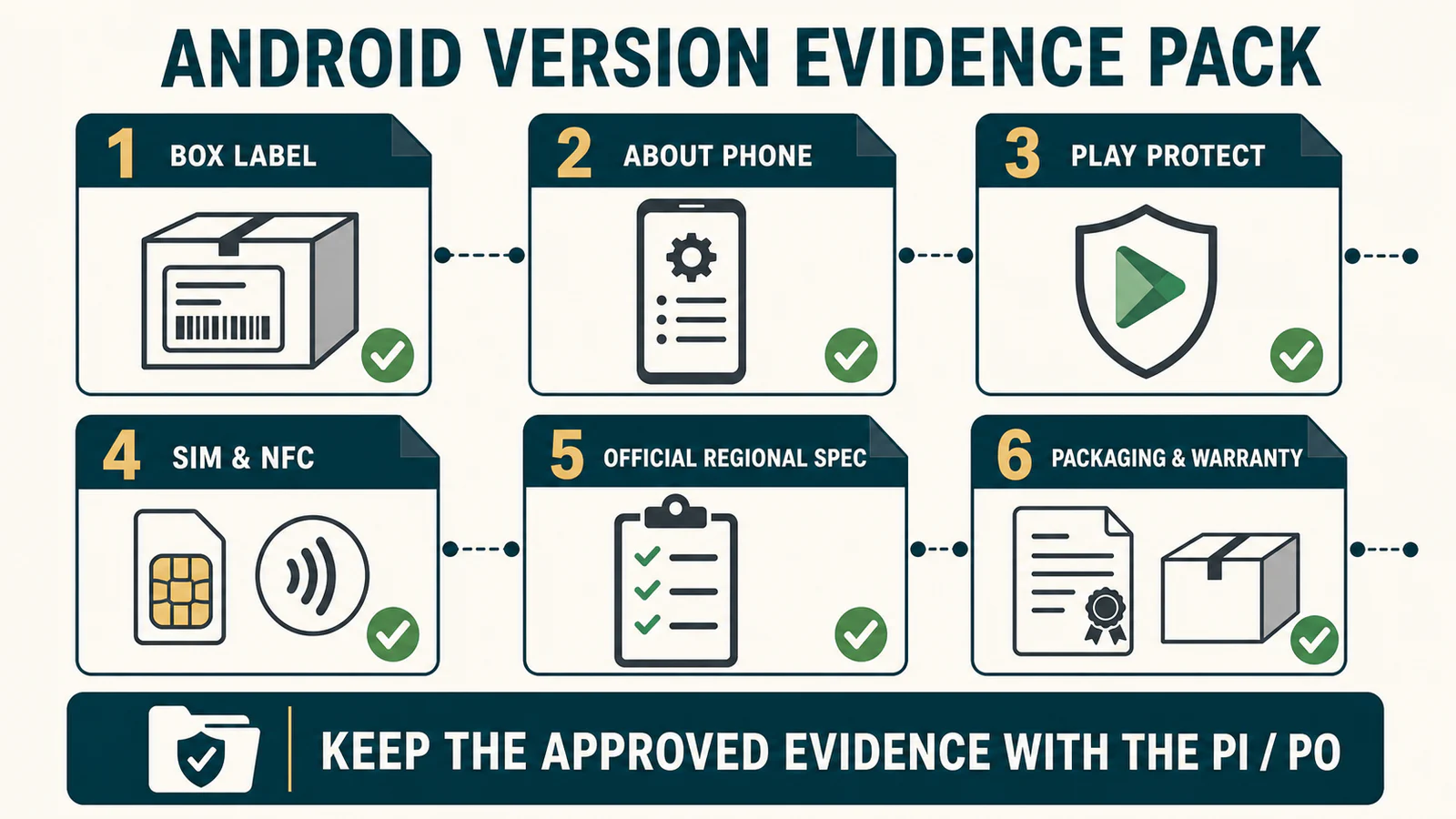
التحقق من نسخة Android في ست خطوات
اتبع هذا التسلسل قبل الدفع أو اعتماد الدفعة النهائي:
- **حدّد الوجهة**: الدولة والمشغّل ولغة العميل والقابس والخدمات الأساسية.
- **ثبّت الهوية**: العلامة التجارية والاسم التجاري ورمز الطراز الدقيق وRAM والتخزين واللون ومنطقة البيع المقصودة.
- **تحقق من الصفحة الإقليمية الرسمية**: الشبكة وSIM/eSIM وNFC وميزات البرمجيات والعلبة والملاحظات الحالية.
- **افحص وحدة ممثّلة**: الملصق وحول الهاتف وقائمة اللغة واعتماد Play Protect والمحدّث ودرج SIM ومحتويات العلبة.
- **شغّل حالات استخدام المشتري**: التطبيقات المطلوبة وSIM شركة الاتصالات والمكالمات/البيانات ومهمة NFC وسلوك إعادة الضبط حيثما ينطبق.
- **اكتب قاعدة القبول**: لا استبدال للطراز أو المنطقة أو البنية أو العلبة أو القابس دون موافقة كتابية من المشتري.
احتفظ بالصور والفيديوهات ولقطات الشاشة وروابط الصفحات الرسمية مع نسخة عرض السعر وتاريخ الاعتماد. فقد تتغير صفحات المنتجات بعد الإطلاق، لذا يجب أن تُظهر حزمة الأدلة ما وافق عليه المشتري في ذلك الوقت.
وللحصول على منهجية قابلة للتكرار، اربط تلك الملفات ببند الطلب المعتمد والجهاز المفحوص كعينة وعلبة البيع بالتجزئة وسجل التعبئة قبل الاعتماد.
قائمة التحقق
- تسجيل الدولة المستهدفة وشركة الاتصالات المستهدفة
- اسم المصنّع والمنتج الاستهلاكي
- رمز الطراز أو العتاد الدقيق
- دولة أو منطقة البيع المقصودة
- RAM والتخزين واللون
- بنية البرمجيات من المصنع وتاريخ تصحيح الأمان
- نتيجة اعتماد Play Protect حيثما تكون GMS مطلوبة
- اختبار لغات النظام المطلوبة
- التحقق من التطبيقات المطلوبة والمحظورة
- مقارنة نطاقات 4G/5G مع شركة الاتصالات المستهدفة
- اختبار متطلبات SIM المادية وeSIM وNFC
- تصوير القابس والمحوّل والكابل ومحتويات العلبة
- توثيق حدود الضمان والدعم الإقليمي
- كتابة قواعد الاستبدال والتعديل بعد الشراء
شروط النسخة في عرض السعر أو الفاتورة الأولية أو أمر الشراء
لا تكتب ”نسخة عالمية“ فقط. وصف بند مفيد هو:
> العلامة التجارية + الطراز الاستهلاكي؛ رمز الطراز الدقيق؛ منطقة البيع المقصودة؛ RAM/التخزين/اللون؛ بنية البرمجيات الأصلية من المصنع وموقّعة منه؛ معتمدة من Play Protect حيثما يُحدَّد؛ اللغات المطلوبة؛ تهيئة SIM/eSIM/NFC؛ قائمة النطاقات الترددية المعتمدة؛ القابس ومحتويات العلبة؛ لا استبدال للطراز أو المنطقة أو البرمجية الثابتة أو الملصق أو الملحق دون موافقة كتابية من المشتري.
أضف حقول الأدلة والقبول أسفل بند المنتج:
- الرقم التسلسلي أو IMEI للعينة المستخدمة في الاعتماد؛
- رابط المواصفات الرسمية للسوق المستهدف؛
- لقطات الشاشة أو الفيديو المطلوبة قبل اعتماد الرصيد؛
- حجم عينة الفحص؛
- الاختلاف المسموح به في التغليف؛
- إجراء المعالجة في حال اختلاف جوهري في الطراز أو البنية أو العلبة.
استخدم دليل مقارنة عروض أسعار الجملة للتأكد من أن الموردين المتنافسين يقدمون عرضًا للنسخة نفسها. فسعر أقل لعتاد أو برمجيات مختلفة ليس سعرًا أقل للصنف نفسه.
أوصاف النسخ التي تستوجب مزيداً من الأدلة
لا تثبت أي من العبارات أدناه أن المنتج سيء. لكن كل واحدة منها تترك سؤالًا مهمًا دون إجابة.
| صياغة المورد أو الموقف | المعلومات الناقصة | استجابة المشتري |
|---|---|---|
| ”نسخة عالمية، تعمل في كل مكان“ | أدلة رمز الطراز وشركة الاتصالات والمنطقة | اطلب الطراز الدقيق والمواصفات الإقليمية الرسمية |
| ”نسخة صينية مع تثبيت Play Store“ | الاعتماد والبنية الأصلية وسلوك إعادة الضبط | تحقق من حالة Play Protect والبنية الموقّعة من المصنّع |
| ”نفس عتاد النسخة العالمية“ | مقارنة النطاقات وSIM/eSIM وNFC والملصق | قارن المواصفات الرسمية لكلا الطرازين |
| ”تدعم العربية“ | مسار الإعداد وتغطية تطبيقات النظام | اطلب فيديو مباشر لقائمة اللغة والإعداد |
| ”SIM مزدوجة“ | تركيبة SIM المادية/eSIM | اطلب صورة درج SIM وأدلة القائمة |
| ”ضمان دولي“ | الطراز والدولة والقناة المؤهلة والإثبات | احصل على سياسة المصنّع الدقيقة كتابيًا |
| تغيّر رمز الطراز بعد الدفع | تغيّرت النسخة والتوافق | أوقف العملية واطلب مقارنة واعتمادًا جديدين |
| سيقوم البائع بتفليش النظام بعد الطلب | مخاطر البنية والاعتماد وOTA وإعادة الضبط | تعامل معه كتهيئة مُفصح عنها، لا كنسخة عادية |
هل من الآمن إعادة بيع هاتف Android بالنسخة الصينية؟
يمكن أن يكون كذلك، بشرط أن تكون النسخة الدقيقة أصلية وقانونية في الوجهة، وموصوفة بوضوح للعميل، ومتحقَّق منها مقابل متطلبات المشتري. تسمية الدولة بحد ذاتها ليست هي المخاطرة. فالمخاطرة هي عدم تطابق غير مُفصح عنه في البرمجيات أو الشبكة أو اللغة أو التغليف أو الدعم أو توقعات العميل.
هل تثبيت Google Play يجعل النسخة الصينية نسخة عالمية؟
لا. تثبيت تطبيقات Google يغيّر جزءًا من تجربة البرمجيات فقط، لا عتاد الراديو، أو تصميم SIM، أو الملصقات، أو القابس، أو العلبة، أو قناة الضمان. وعلى المشتري أيضًا التحقق من اعتماد Play Protect وما إذا كان الجهاز لا يزال على بنية أصلية موقّعة من المصنّع.
هل ROM العالمي هو نفسه اعتماد Play Protect؟
لا. ”ROM العالمي“ ليس مصطلح اعتماد من Google. اعتماد Play Protect هو حالة جهاز يمكن التحقق منها في إعدادات Play Store. سجّل وصف البائع لـ ROM ونتيجة اعتماد الجهاز بشكل منفصل.
هل يمكن لهاتفين بالاسم نفسه أن يدعما نطاقات مختلفة؟
نعم. يمكن أن يغطي الاسم الاستهلاكي عدة رموز طراز أو نسخ إقليمية. قارن الرمز المطبوع على العلبة والظاهر في حول الهاتف مع المواصفات الرسمية للسوق المستهدف، ثم أكّد النطاقات والخدمات اللازمة مع شركة الاتصالات المستهدفة.
هل تتمتع هواتف النسخة العالمية بضمان عالمي؟
ليس تلقائيًا. قد تعتمد أهلية الضمان على الطراز والدولة والقناة والتفعيل المحلي وإثبات الشراء وشروط المصنّع الحالية. أكّد مسار الدعم الدقيق قبل الإعلان عن تغطية الضمان لعملاء التجزئة.
هل ينبغي للمشترين قبول ROM عالمي يثبّته البائع؟
فقط بعد التعامل معه كتهيئة منفصلة. سجّل رمز العتاد الأصلي والبنية المثبّتة، وتحقق من اعتماد Play Protect، واختبر سلوك إعادة الضبط وOTA، واعتمد التطبيقات المطلوبة، ووثّق من يتحمل المسؤولية إذا لم تبقَ البرمجيات في الحالة المعتمدة.
الأدلة والمصادر
روجع هذا الدليل آخر مرة في 31 يوليو 2026. وهو يستند إلى مصادر تقنية ومصادر رسمية من المصنّعين:
- نظرة عامة على برنامج توافق Android: وثيقة تعريف التوافق (CDD) ومجموعة اختبار التوافق (CTS) وأهلية الحصول على ترخيص Google Mobile Services.
- إرشادات اعتماد Google Play Protect: معنى الاعتماد والفحص على الجهاز ومعالجة مشكلات البنى المعدّلة.
- الأجهزة المدعومة في Google Play: تحديد الطراز/البنية وقائمة الأجهزة المعتمدة.
- المواصفات العالمية الرسمية لهاتف Xiaomi 15: تنبيهات إقليمية بشأن eSIM والاتصال ومحتويات العلبة.
- خدمة الضمان الدولي لهواتف Xiaomi الذكية: شروط الضمان للطرازات المحددة والأسواق المدعومة.
- المواصفات العالمية لهاتف HONOR Magic8 Pro: مسارات المواصفات القُطرية والإقليمية لدى المصنّع.
حقول طلب عرض السعر
- الدولة المستهدفة وشركة الاتصالات المستهدفة وقناة البيع المقصودة
- العلامة التجارية واسم الطراز الاستهلاكي ورمز الطراز الدقيق
- الدولة أو المنطقة الرسمية المقصودة للبيع
- RAM والسعة التخزينية واللون والكمية لكل SKU
- بنية البرمجيات من المصنع وإصدار Android وتاريخ تصحيح الأمان
- متطلب خدمات Google Mobile Services واعتماد Play Protect
- لغات النظام والإعداد المطلوبة
- التطبيقات المطلوبة والمحظورة والتي يختبرها المشتري
- نطاقات 4G/5G وخدمات شركة الاتصالات الواجب التحقق منها
- تهيئة SIM المادية وeSIM وNFC
- نوع القابس وإخراج المحوّل والكابل ومحتويات العلبة
- ملصقات العلبة والأدلة والملصقات التنظيمية أو ملصقات المستورد المطلوبة
- حدود الضمان والدعم بعد البيع
- أدلة العينة ونطاق الفحص وتاريخ الاعتماد
- قاعدة عدم الاستبدال للطراز أو المنطقة أو البرمجية الثابتة أو القابس أو التغليف
- عنوان تسليم في البر الرئيسي للصين أو هونغ كونغ، أو تعليمات استلام عبر UPS/DHL يرتبها المشتري
أدرج فحص النسخة في طلب عرض السعر (RFQ)
يجب أن يكون وصف المنتج النهائي محددًا بما يكفي ليتمكن موظف آخر أو مفتش أو مورد من إعادة إنتاجه. تصفح خيارات هواتف الجملة الحالية، وراجع مسار HONOR بالجملة أو مسار Xiaomi بالجملة، ثم أرسل الطراز والسوق ومتطلبات الوظائف الدقيقة عبر طلب عرض سعر الجملة.
بالنسبة لصفقة أولى، اجمع بين أدلة النسخة هذه وسير عمل التحقق من المورد وحدود التسليم بين البر الرئيسي للصين وهونغ كونغ المنشورة على الموقع.