
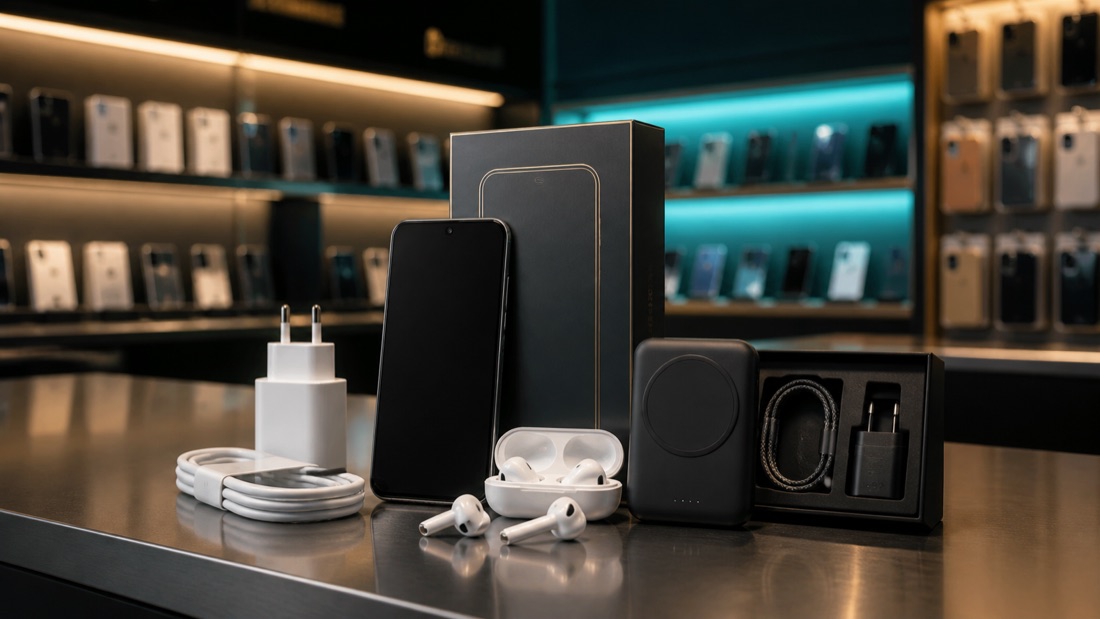
A mixed-SKU order can answer several questions in one shipment. It can show which phone tier moves in your market, which charger wattage customers buy and whether power banks deserve shelf space. Splitting those tests across three orders creates three rounds of coordination and can leave the buyer waiting three times as long for all the answers. The method we use for mixed bundle orders begins with the shelf rather than the catalog.
Place that shelf plan inside the approved device and accessory thresholds in the phone wholesale MOQ guide before assigning quantities to individual lines.
Key Takeaways
- One carton can test several product lines when every line is chosen against a shelf slot.
- Devices start at 10 units with no per-SKU minimum; accessories add 20 per SKU; the order clears US$2,000 in total.
- A fallback written next to each line turns stock surprises into substitutions instead of delays.
Start from the shelf, not the catalog
Scrolling through a catalog and collecting interesting models rarely produces a balanced mixed order. Draw the shelf first. A phone counter usually needs a budget row, a mid-range row and one hero device. An accessory wall has separate space for charging, power and audio. Turn each empty slot into an order line, then set the quantity according to how quickly that slot is expected to turn.
Shelf plan
- Map your shelf slots and note the retail price band each slot must hit before you look at any model name.
- Give every slot a turnover guess: fast slots earn bigger quantities, experimental slots get the minimum.
- Add attach items deliberately. The charger that sells with a phone belongs in the same carton as that phone.
The arithmetic that makes a mixed order work
Every mixed order we quote has two quantity thresholds and one value floor. New Android phones, tablets and used iPhones start at 10 units, with no per-SKU minimum within the device mix. Each accessory SKU starts at 20 units, and the combined order value must exceed US$2,000. Under those rules, a first order can include three or four device models together with a small accessory selection.
The value floor affects the balance. If the devices already clear US$2,000, the accessory side can remain experimental. Two SKUs at 20 units each are enough to test demand. If the device total is light, accessories have to make up more of the order value. In that case, putting more units into one proven charger line is usually more sensible than spreading the budget across five untested lines.
Substitution rules keep a mixed order fillable
A mixed order has more lines, which means more chances for a colour to sell out or a storage variant to be allocated elsewhere. Device and accessory lines need different fallback rules. For a phone, an acceptable substitute is usually the same model in another colour or the next storage tier. For an accessory, it may be another wattage or cable length within the same product family. Retail customers rarely notice that kind of change.
Write the fallback next to every line before submitting the order, and mark any line that cannot be substituted. When these rules are already recorded, the supplier can return one complete quote instead of asking for a decision on each unavailable item.
Before approving the packed mix, reconcile each model, storage option and color against the carton map with the mobile phone wholesale quality control checklist. For the charger and power-bank lines in the same mix, run the charger and power bank wholesale QC checklist against each accessory order line.
One RFQ, one review
A mixed order should still be sent as one request and reviewed once. Include the shelf-based list and quantity for each line, acceptable fallbacks, storage and colour preferences, and the delivery arrangement. Delivery can be to a buyer-nominated address in mainland China or Hong Kong, or collected from our warehouse through the buyer’s UPS/DHL account. Payment is by T/T or L/C. The team responds to a clear RFQ within one business day. After the goods arrive, the store-ready bundle guide explains the retail side of carton planning, packaging language and margins.
A smaller order can still teach the buyer a great deal when each line has a shelf slot and a fallback. The carton must clear the value floor while leaving enough room for a repeat order next month. That record gives the second order a clear starting point. Submit the first plan through the RFQ.
RFQ Fields
- Shelf-based model list with quantity per line
- Acceptable substitute for each line, and the locked lines marked
- Storage, colour and packaging preferences
- Mainland China or Hong Kong delivery address, or buyer-arranged UPS/DHL pickup
- Target repeat cycle, if a monthly rhythm is planned